

Is that chest pain your heart trying to warn you, or something less serious?
Over 6.5 million people go to emergency rooms for chest pain every year, and millions more visit clinics.
Not every case is a heart attack, but guessing could cost you time that matters.
This quick guide explains the key warning signs that point to a heart problem, the common look-alikes that can fool you, what details to track, and exactly when you should call 911.
Immediate Signs Chest Pain May Be Heart-Related

Over 6.5 million people end up in emergency rooms each year because of chest pain. Another 4 million show up at outpatient clinics. Not every case turns out to be a heart attack, but you can’t afford to guess wrong.
If your chest pain feels like pressure, squeezing, or tightness and it’s sticking around for more than a few minutes, call 911. Don’t sit there hoping it’ll just go away. Heart muscle starts dying within minutes when blood flow stops, and getting treatment in that first hour can limit damage and save your life.
Here’s what to watch for that screams “heart problem”:
- Severe pressure, squeezing, or crushing in the center or left side of your chest
- Pain moving into your left arm, right arm, neck, jaw, back, or stomach
- Shortness of breath whether you’ve got chest pain or not
- Cold, clammy sweating that hits suddenly
- Nausea, vomiting, or really bad indigestion that feels nothing like your normal upset stomach
- Lightheadedness, dizziness, or feeling like you might pass out
- Pain that keeps coming back even after it stops briefly
- Symptoms that started during or right after exercise or emotional stress
If chest pain hangs on longer than 5 to 10 minutes or keeps returning, call emergency services now. Don’t drive yourself to the hospital. EMS crews can start treatment while you’re still in the ambulance, which improves your odds of recovery. Every minute matters when your heart muscle isn’t getting oxygen.
How to Tell Cardiac vs Non-Cardiac Chest Pain

Cardiac chest pain usually feels like pressure, tightness, heaviness, squeezing, or burning. Not a quick stab. People say things like “something heavy sitting on my chest” or “a tight band wrapped around my ribs.” The pain often starts in the center or just left of center, behind your breastbone, but it’s hard to point to with one finger.
Heart pain typically doesn’t change when you move, shift position, press on your chest, or take a deep breath. It often gets worse with physical effort or stress and might ease up with rest, but it rarely vanishes completely just because you sat down or stretched. Early heart attack pain can come and go, which makes people think it’s nothing serious.
Non-cardiac chest pain acts differently. Sharp, stabbing pain you can pinpoint with one finger is less likely to be your heart. Pain that gets worse when you breathe deeply, cough, twist, or press on a specific spot usually points to the chest wall, ribs, or lungs. If changing your position or downing an antacid makes the pain disappear quickly, that’s a clue it might be reflux or muscle strain.
GERD and esophageal spasms can cause burning or squeezing that feels almost identical to cardiac pain. That’s why doctors use tests instead of symptoms alone. Musculoskeletal pain is tender when you press the sore area and often gets worse when you move your arms or twist. Panic attacks can produce intense chest tightness along with rapid heartbeat, sweating, and a sense of doom, but the pain usually doesn’t radiate to your arm or jaw the way cardiac pain does.
| Type of Chest Pain | Key Features | Cardiac or Non-Cardiac |
|---|---|---|
| Pressure or squeezing, worsens with exertion, may radiate | Central or left-sided, doesn’t change with movement or breathing | Cardiac |
| Sharp, stabbing, localized | Worse with breathing, coughing, or pressing on chest wall | Non-Cardiac (musculoskeletal, pleurisy) |
| Burning after meals, sour taste | Improves with antacids, worse lying down | Non-Cardiac (GERD) |
| Tightness with rapid breathing, sweating, intense fear | No radiation, often resolves when anxiety settles | Non-Cardiac (panic attack) |
| Pain with deep breaths, cough, fever | May have lung-related symptoms | Non-Cardiac (lung causes, pneumonia, pleurisy) |
| Pressure lasting >10 minutes, radiates to jaw or arm, sweating | Doesn’t improve with position change or rest | Cardiac (heart attack) |
Three patterns suggest chest pain is less likely to be cardiac:
- Pain that improves on its own or with over-the-counter antacids, anti-inflammatory meds, or stretching
- Pain tightly limited to one small area you can cover with your fingertip
- Pain that gets worse or better when you move, breathe deeply, or change position
These patterns help, but they’re never definitive. Some people having heart attacks feel pain that shifts slightly with breathing, and reflux pain can mimic a heart attack so closely that testing is the only way to know.
Non-Heart Causes of Chest Pain That Can Confuse You

Chest pain can come from your digestive system, muscles, ribs, lungs, or even your mental state. GERD, or gastroesophageal reflux, is one of the most common non-cardiac causes. It creates burning behind the breastbone that often starts after eating, gets worse when you lie down, and may leave a sour or acidic taste in your mouth. Antacids or proton-pump inhibitors usually help within minutes.
Musculoskeletal pain from pulled muscles, strained ribs, or costochondritis feels sharp or achy and gets worse when you press the tender spot, twist your torso, or lift your arms. Costochondritis is inflammation where your ribs attach to the breastbone. It can hurt intensely even though it’s not dangerous. Panic attacks produce chest tightness, a racing heart, shortness of breath, and overwhelming fear, but the pain rarely spreads to your arm or jaw.
Common non-heart causes include:
- GERD or esophageal spasm – burning or squeezing pain, often after meals
- Musculoskeletal strain – tender, worse with movement or pressure
- Costochondritis – sharp pain at rib-cartilage junctions
- Panic attacks – chest tightness with rapid breathing and intense anxiety
- Pleurisy – sharp pain that worsens with deep breaths or coughing
- Pneumonia or lung infections – pain with cough, fever, and breathing trouble
- Pulmonary embolism – sudden sharp pain, shortness of breath, may cough blood
- Gallbladder disease – pain in upper right abdomen or chest after fatty meals
Even though these causes aren’t heart related, some still require urgent care. A pulmonary embolism is life threatening, and severe pneumonia needs prompt treatment. If you’re unsure what’s causing your chest pain, get it checked.
When Chest Pain Means You Must Call 911 Immediately

Certain chest pain patterns are so strongly linked to life threatening heart problems that you shouldn’t wait, watch, or wonder. If your chest pain feels severe, crushing, or like something is squeezing your chest and it doesn’t ease up within a few minutes, call 911.
Don’t try to decide on your own whether it’s “bad enough” for emergency care. EMS can run an EKG, give oxygen, start an IV, and administer medications before you reach the hospital. That buys critical time for your heart muscle.
Call 911 right now if chest pain comes with any of these:
- Severe pressure, tightness, or crushing sensation that feels intense and unrelenting
- Pain spreading to your jaw, neck, shoulders, arms, back, or stomach
- Shortness of breath that makes it hard to talk or walk
- Sudden cold, clammy sweating that soaks your skin
- Nausea, vomiting, or severe indigestion that feels different from usual stomach trouble
- Lightheadedness, dizziness, or fainting
- Symptoms lasting longer than 5 to 10 minutes, or pain that stops and starts repeatedly
Emergency medical teams can begin treatment the moment they arrive. Paramedics are trained to recognize heart attacks fast. Driving yourself wastes precious minutes and puts you at risk of losing consciousness behind the wheel. Early treatment within the first hour after a heart attack starts can limit permanent damage and dramatically improve your recovery.
Heart-Related Chest Pain in Women, Older Adults, and People With Diabetes

Heart attacks don’t always announce themselves with dramatic chest pressure. Women often experience milder chest discomfort they describe as indigestion, pressure, or tightness rather than crushing pain. They may also feel unusual fatigue that comes on suddenly, pain in the upper back or between the shoulder blades, jaw discomfort, nausea, or shortness of breath without much chest pain at all.
Older adults over 75 may not report chest pain even during a serious heart attack. Instead, they might feel confused, weak, dizzy, or just “off” in a way that’s hard to describe. Shortness of breath, a vague sense of unwellness, or sudden fatigue can be the only signs that something is wrong.
People with diabetes are at higher risk for silent heart attacks, meaning they feel little or no pain because nerve damage blunts the warning signals. Fatigue, nausea, shortness of breath, or sweating may be the main clues. If you have diabetes and develop unexplained tiredness, trouble breathing, or upper body discomfort, treat it seriously and seek medical evaluation.
Atypical heart attack features to watch for include:
- Extreme, sudden fatigue with no clear reason
- Jaw, neck, or upper back pain without obvious chest pressure
- Shortness of breath as the primary or only symptom
- Vague feelings of illness, confusion, or weakness in older adults
Don’t dismiss symptoms just because they don’t match the classic image of a heart attack. Women, older adults, and people with diabetes need to have a lower threshold for seeking emergency care.
Risk Factors That Make Heart-Related Chest Pain More Likely

Not everyone who gets chest pain is having a heart attack, but certain risk factors raise the odds that your pain is coming from blocked arteries or damaged heart muscle. Smoking, high blood pressure, high cholesterol, and diabetes all damage blood vessels over time and increase the chance that chest pain signals a cardiac problem.
A family history of heart disease, especially if a parent or sibling had a heart attack before age 55 for men or 65 for women, also increases your risk. Being sedentary, carrying extra weight around your midsection, and being over 65 all tilt the likelihood toward cardiac causes when chest discomfort appears.
Major cardiac risk factors include:
- Active smoking or recent tobacco use
- High blood pressure that’s uncontrolled or poorly managed
- High cholesterol, especially high LDL or low HDL
- Diabetes, which damages arteries and nerves
- Family history of early heart disease
- Sedentary lifestyle with little regular physical activity
If you have two or more of these risk factors and develop new chest pain, take it seriously even if the pain seems mild or goes away quickly. Risk factors don’t guarantee a heart attack, but they mean you need a faster, more thorough evaluation. Early detection of heart disease can prevent a full blown heart attack later.
What Happens During a Medical Evaluation for Chest Pain
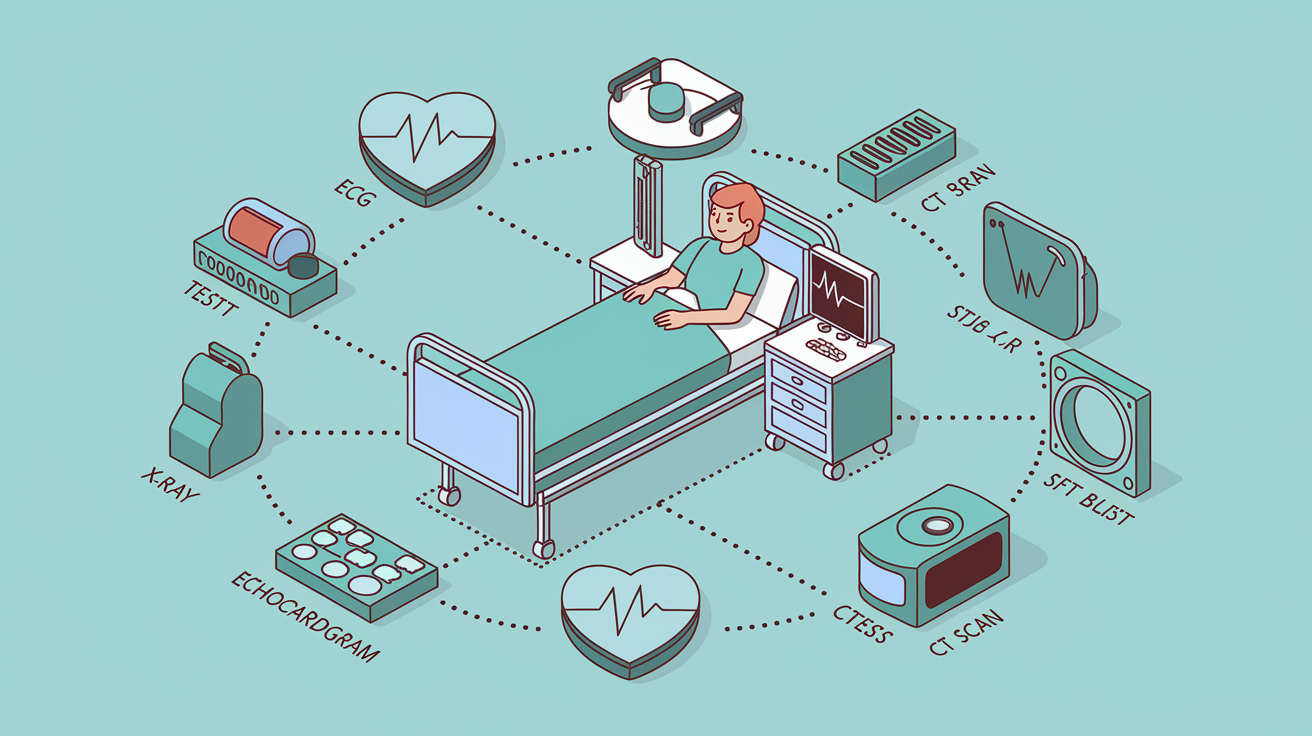
When you arrive at an emergency room or clinic with chest pain, the medical team will move quickly to determine whether your heart is in danger. The first step is usually a focused medical history and a quick physical exam, followed by an electrocardiogram within minutes of arrival.
Blood tests for cardiac enzymes, especially troponin, are drawn soon after. Troponin is a protein released when heart muscle is damaged, and modern tests can detect even tiny amounts. A chest X-ray checks your lungs and heart size, looking for pneumonia, fluid, or other problems that might explain your symptoms.
If initial tests don’t show a clear answer, you may have an echocardiogram to watch your heart beat and check valve function and wall motion. Stress testing measures how your heart performs under exertion and can reveal blockages that don’t show up at rest. A CT scan may be used to look for pulmonary embolism or aortic problems if those are suspected.
| Test | What It Detects | Used For |
|---|---|---|
| Electrocardiogram (ECG/EKG) | Ischemia, previous heart attack, arrhythmias | First-line test for suspected cardiac pain |
| Troponin blood test | Heart muscle damage | Confirms or rules out heart attack |
| Chest X-ray | Pneumonia, heart size, fluid, lung collapse | Evaluates non-cardiac chest-pain causes |
| Echocardiogram | Heart structure, valve function, wall motion | Detects heart-muscle or valve problems |
| Stress test | Ischemia, arterial blockages | Assesses heart performance under exertion |
| CT scan or advanced imaging | Pulmonary embolism, aortic dissection | Identifies serious non-cardiac emergencies |
These tests work together to build a complete picture. Symptoms alone aren’t enough to confirm or rule out a heart problem, which is why professional evaluation and diagnostic testing are essential even when chest pain feels mild or goes away on its own.
Documenting and Tracking Chest Pain to Understand Patterns

Keeping a simple record of your chest pain episodes can help your doctor figure out what’s going on. Write down when each episode started, how long it lasted, what you were doing when it began, and whether anything made it better or worse.
Note whether the pain stayed in one spot or spread to your arm, jaw, neck, back, or stomach. Record other symptoms that happened at the same time, such as shortness of breath, sweating, nausea, dizziness, or fatigue.
Track these details:
- When it started and whether it’s getting more frequent, more intense, or lasting longer
- What triggered it, such as physical exertion, stress, eating, lying down, or nothing obvious
- How it felt, using words like pressure, squeezing, burning, stabbing, or aching
- Where it hurt and whether it moved to other areas
- What made it better or worse, including rest, position changes, antacids, or medications
Patterns matter. Pain that happens only after heavy meals and improves with antacids points toward reflux. Pain that starts during exertion and eases with rest suggests angina. Pain that comes out of nowhere, lasts a long time, and doesn’t respond to anything is more concerning for a heart attack or other serious cause. Bringing a written log to your appointment saves time and gives your clinician concrete information to work with.
Treatment and Immediate First Aid Options for Possible Heart-Related Chest Pain

If you or someone near you has chest pain that might be a heart attack, call 911 first. While waiting for EMS, have the person sit or lie down in a comfortable position and stay calm. If the person isn’t allergic to aspirin and hasn’t been told to avoid it, chewing a regular strength aspirin can help slow clot formation and may reduce heart damage.
If the person has been prescribed nitroglycerin for angina, they can take it as directed, usually one tablet under the tongue. Nitroglycerin can relieve angina pain by widening blood vessels, but it doesn’t stop a heart attack. Don’t give nitroglycerin to someone who hasn’t been prescribed it, because it can cause dangerous drops in blood pressure.
Safe first aid steps include:
- Call 911 immediately and stay on the line for instructions
- Have the person rest in a seated or semi-reclined position
- Offer aspirin if there are no allergies or bleeding risks, one regular strength tablet chewed
- Give prescribed nitroglycerin if the person has it and knows how to use it
These steps don’t replace emergency care. EMS teams can give oxygen, start an IV, run an EKG, and administer clot-busting drugs or other medications that aren’t available at home. Getting advanced treatment started in the ambulance improves survival and reduces the amount of permanent heart damage.
Final Words
You saw the immediate red flags: radiation to the arm or jaw, shortness of breath, sweating, dizziness, nausea, and pain lasting more than a few minutes. These signs need urgent attention.
We walked through how cardiac pain often feels like pressure or squeezing, how to spot common mimics, who might have atypical signs, what tests doctors use, and tracking and first-aid steps.
If you’re asking how to know if chest pain is heart related, track timing, triggers, and related symptoms and call 911 for severe or lasting pressure-like pain. Getting help quickly improves outcomes and gives you answers.
FAQ
Q: How do you know if chest pain is cardiac or not? / How do I make sure my chest pain is not heart related?
A: To tell if chest pain is cardiac or not, watch for pressure-like chest pain that spreads to the arm, jaw, or neck, with shortness of breath, sweating, nausea, or pain lasting more than 5 to 10 minutes. Get help.
Q: What are the 3 P’s of chest pain?
A: The 3 P’s of chest pain are pressure, pleuritic, and positional. Pressure often points to cardiac causes, pleuritic pain is worse with breathing, and positional pain changes with movement or posture.
Q: What type of chest pain is not serious?
A: Chest pain that is sharp, brief, localized, reproducible with touch or movement, or relieved by antacids is less likely serious and often from muscle strain, costochondritis, or reflux. Still get evaluated if new or severe.