

Could that small rash be a life-threatening emergency?
Many rashes are harmless, but some need urgent care.
This post lays out the clear warning signs: breathing trouble, swelling of the face or throat, blisters or skin peeling, purple or black spots, severe pain, or a very high fever that should send you to the ER now.
You’ll get short, practical steps: what visuals and symptoms to track, when to seek same-day care or emergency help, and what to tell a clinician.
Key Warning Signs That a Rash Needs Medical Attention Now
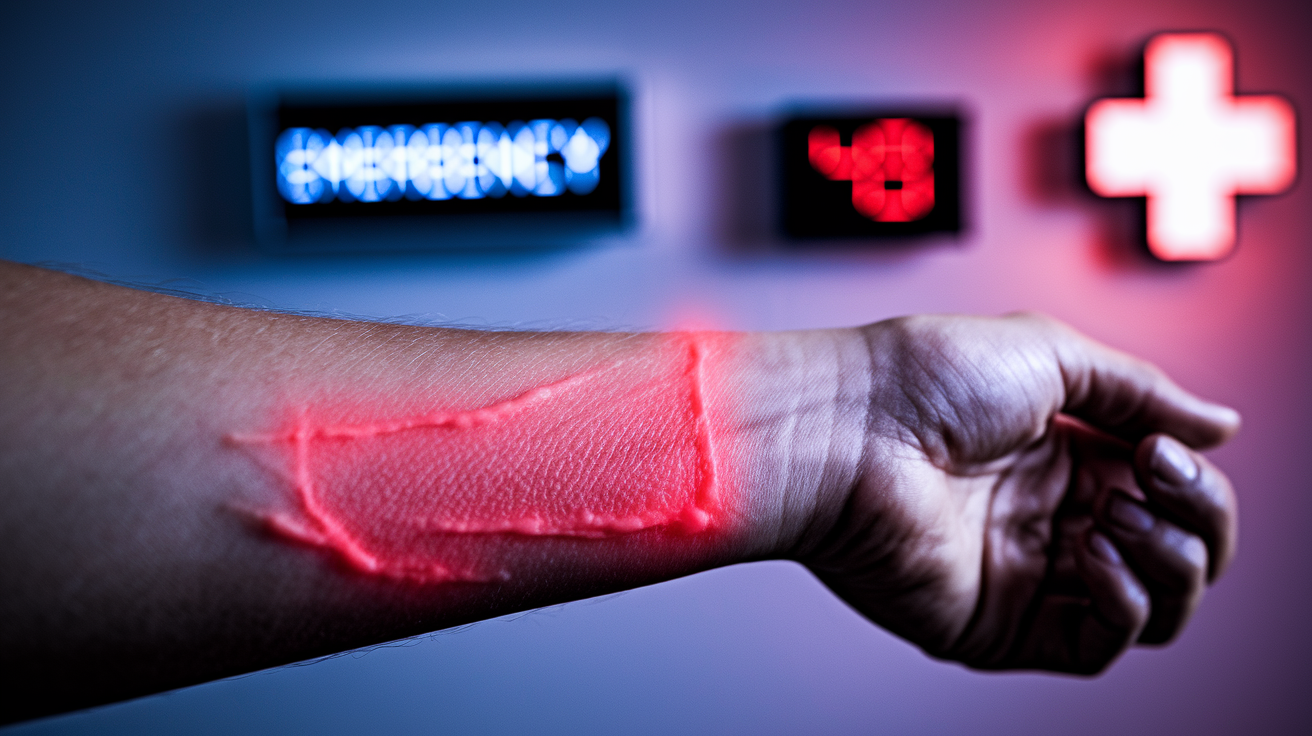
A rash becomes a medical emergency when it shows up alongside breathing problems, swelling in your face or throat, confusion, very high fever, or if your skin starts peeling fast, develops purple or black spots, or hurts way more than it looks like it should.
These symptoms can point to conditions that move fast and threaten your life. Stevens-Johnson syndrome and toxic epidermal necrolysis make skin detach in sheets. DRESS syndrome triggers inflammation in your internal organs while a rash spreads. Meningococcemia creates dark purple spots that won’t blanch when you press on them, a sign that infection is spreading through your bloodstream. Necrotizing fasciitis destroys the soft tissue under your skin and often causes pain that seems completely out of proportion to what you’re seeing. Sepsis can start with a rash and spiral into organ failure. Anaphylaxis can close your airway in minutes.
If you notice any of these, get to the ER now or call 911:
- High fever (over 103°F or 39.4°C) with a rash that’s spreading fast
- Blisters forming across large areas or skin peeling in sheets
- Swelling in your face, lips, tongue, or throat
- Trouble breathing, wheezing, or feeling like your airway’s tightening
- Confusion, severe dizziness, or delirium
- Purple or black spots that look like bruises but don’t fade when you press them
- Severe pain that feels worse than the rash looks
- Rapid spread across most of your body within hours
Don’t wait to see if these get better. Minutes can matter.
Visual Signs in a Rash That Suggest Medical Evaluation Is Needed

Certain visual patterns point to conditions that need evaluation even if you feel okay otherwise. A rapidly expanding red patch, especially if it’s warm and tender, can mean cellulitis or another bacterial infection. Blisters or open sores raise your risk of secondary infection and fluid loss. A bullseye or target shaped rash may signal Lyme disease from a tick bite. Linear red streaks radiating from a rash suggest the infection is tracking along lymph vessels, which means your body’s struggling to contain it.
Purple or bruise like discoloration (purpura) isn’t typical of common rashes. It can indicate vasculitis, where blood vessels are inflamed, or a problem with clotting. Crusting, weeping, or oozing lesions with yellow or green fluid usually mean bacterial infection. Foul odor from a rash site is another red flag. These visuals help clinicians narrow the cause and choose the right tests or treatments quickly.
| Appearance | What It May Mean |
|---|---|
| Bullseye or target pattern | Possible Lyme disease; needs prompt antibiotic evaluation |
| Purple spots or purpura | May indicate vasculitis, clotting disorder, or serious infection |
| Crusting, oozing, or yellow/green pus | Likely bacterial infection; may require antibiotics |
| Linear red streaks | Lymphatic spread of infection; needs same-day care |
| Rapid spread across large areas | Could be systemic infection, drug reaction, or autoimmune flare |
Knowing When a Rash With Systemic Symptoms Needs Care

A rash that comes with whole body symptoms (fever, joint pain, swollen lymph nodes, or extreme fatigue) often means something more than skin deep is going on. These combinations can point to viral infections like measles, mononucleosis, or scarlet fever. They can also signal autoimmune conditions such as lupus, psoriatic arthritis, or rheumatoid arthritis, where your immune system mistakenly attacks healthy tissue.
Systemic symptoms don’t always mean an emergency, but they do mean your body’s mounting a significant immune response. A low grade fever (under 103°F) with a spreading rash and achy joints is worth getting checked within a day or two, not weeks. Swollen lymph nodes near the rash site can indicate your immune system is fighting an infection, but if nodes stay enlarged or the rash worsens, you need evaluation.
If you feel unwell beyond just the skin, don’t dismiss it. The rash is often the visible clue that helps clinicians find the underlying cause. Waiting too long can allow infections to progress or autoimmune inflammation to cause joint or organ damage.
Watch for these moderate concern systemic symptoms that need timely evaluation:
- Low grade fever (100.4–103°F) lasting more than a day or two alongside the rash
- Swollen, tender lymph nodes in your neck, armpits, or groin
- Joint pain or stiffness that started around the same time as the rash
- Persistent fatigue or feeling generally unwell (malaise)
- Headache or body aches that feel out of proportion to the rash
- Rash that covers a large portion of your body without obvious cause
Infection Signs in a Rash That Mean You Should See a Clinician

Localized infection in a rash shows up through changes at the rash site itself, not necessarily throughout your whole body. The skin around the rash becomes warm to the touch, swollen, and increasingly tender. You might see crusting or scabbing, especially at the edges. Red streaks extending from the rash toward the center of your body are a classic sign that bacteria are traveling through lymphatic channels.
Pus (yellow, green, or white fluid) and a foul smell both indicate bacterial overgrowth. These infections (cellulitis, impetigo, or sometimes MRSA) usually need antibiotic treatment. If you have any chronic condition that affects healing or immunity (diabetes, circulatory problems, immune suppression), even mild infection signs deserve prompt attention because they can escalate faster.
Here are five progressive signs that a rash is becoming infected:
- Increasing warmth and tenderness at the rash site over 24 hours
- Swelling that extends beyond the original rash border
- Redness spreading outward or red streaks moving toward your torso
- Crusting, scabbing, or oozing of yellow, green, or cloudy fluid
- Foul odor coming from the rash or surrounding skin
Common Rash Types and Their Different Levels of Risk

Rashes fall into rough risk categories based on how they behave and what they might indicate.
Low Risk Rash Types
These are common, usually self limited, and often respond to over the counter care. Mild eczema shows up as dry, itchy patches. Hives (urticaria) are raised, itchy welts that move around and usually fade within hours or a day. Ringworm and athlete’s foot are fungal infections that look scaly or ring shaped. Scabies causes intense itching, especially between fingers or around the waist. Insect bites produce red, itchy bumps. Heat rash forms tiny bumps in areas where sweat gets trapped. Candida or intertrigo appears as red, moist irritation in skin folds. Early drug reactions (within days of starting a new medication) can cause mild redness or itching without fever or blisters.
Moderate Risk Rash Types
These may need prescription treatment or closer monitoring. Mild cellulitis is a warm, red, painful patch of skin without high fever or rapid spread. Impetigo produces honey colored crusts, usually around the nose or mouth, and needs antibiotic cream or pills. Contact dermatitis from poison ivy can be moderate risk if blistering is widespread, because broken blisters invite infection. Shingles (in areas away from the face) causes painful blisters along a nerve path and benefits from early antiviral treatment.
High Risk Rash Types
These need urgent or emergency care. Measles with fever and a full body rash, especially if you’re unvaccinated. Shingles near or in the eye can cause vision loss. Widespread drug reactions with fever or blisters may be early Stevens-Johnson syndrome or DRESS. Meningococcemia produces a rapidly spreading purplish rash with high fever. Necrotizing fasciitis causes severe pain, often with skin discoloration and systemic illness. A bullseye rash after a tick bite is the hallmark of Lyme disease and needs antibiotics quickly to prevent joint and heart complications.
| Rash Type | Risk Level | Typical Next Step |
|---|---|---|
| Mild eczema, hives, ringworm | Low | OTC treatment; see a clinician if not better in 3–5 days |
| Mild cellulitis, impetigo, poison ivy with blisters | Moderate | Urgent care or primary care within 1–2 days |
| Shingles (face/eye), widespread drug rash with fever | High | ER or urgent specialist referral same day |
| Bullseye rash (Lyme), spreading cellulitis with fever | High | Same-day evaluation; antibiotics usually needed |
| Purple non-blanching spots, severe pain, confusion | Emergency | Call 911 or go to ER immediately |
| Breathing difficulty, facial swelling with rash | Emergency | Call 911; possible anaphylaxis |
When to Choose Home Care, Urgent Care, Telehealth, or the ER for a Rash
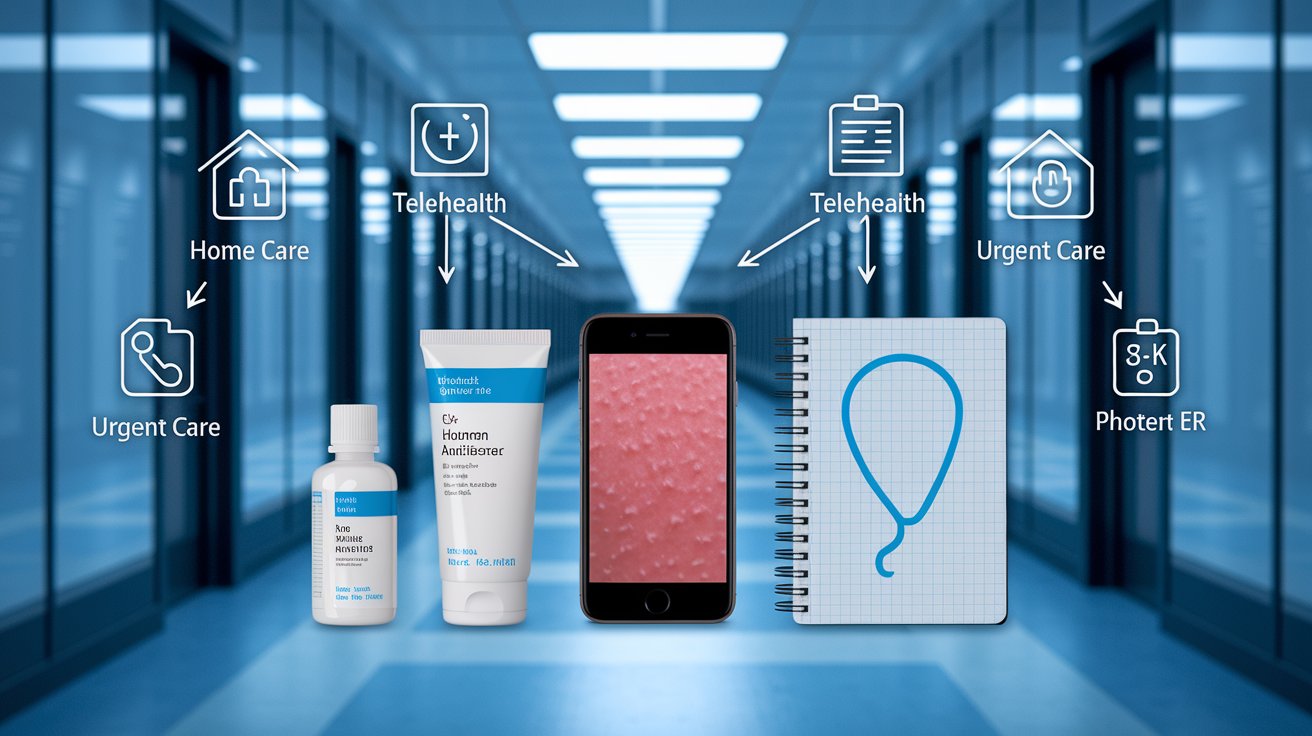
Home care is the right choice when your rash is mild, limited to a small area, not spreading quickly, and you have no fever, pain, blisters, open sores, or pus. You feel well otherwise. Examples include a small patch of dry skin, a few bug bites, or mild itching after trying a new lotion. Over the counter hydrocortisone, moisturizer, and an oral antihistamine often handle these within a few days.
Telehealth works well for new, non severe rashes that you can photograph clearly. It’s a good option for recurrent conditions you’ve had before, like eczema flares or seasonal hives, or for questions about rash prevention. Telehealth is also appropriate for suspected fungal infections (ringworm, athlete’s foot) or mild contact dermatitis when you want guidance without needing an in person exam. Avoid telehealth if the rash involves your eyes, mouth, or genitals, if you’re immunocompromised, or if you have fever, severe pain, facial swelling, or shortness of breath.
Urgent care handles most uncomplicated but concerning rashes. Go to urgent care if your rash is worsening, has lasted more than a few days without improvement, or is accompanied by low grade fever, localized swelling, increasing pain, or persistent itching. Urgent care clinicians can do basic blood tests, skin swabs, and sometimes patch testing. They can prescribe topical or oral antibiotics, antifungals, antihistamines, and corticosteroids. Note that skin cultures (for impetigo or MRSA) may take up to 24 hours for results, and some diagnostics like fungal KOH tests or serologies for viruses are less common at urgent care.
The ER is for true emergencies only. Go to the ER or call 911 if you have any breathing difficulty, throat or face swelling, confusion, severe dizziness, high fever with rapid rash spread, purple or black spots, or pain that feels out of proportion to what you see. These can indicate anaphylaxis, sepsis, Stevens-Johnson syndrome, necrotizing fasciitis, or meningococcemia.
Follow these four steps to decide where to go:
- Check for emergency red flags first (breathing trouble, confusion, high fever, purple spots, severe pain). If present, go to the ER or call 911.
- If no emergency signs but the rash is worsening, spreading, or you have low grade fever or pain, choose urgent care for same day or next day evaluation.
- If the rash is new, mild, and you can take clear photos, consider telehealth for guidance, especially if you’ve had similar rashes before.
- If the rash is very mild, localized, and you feel fine, try home treatment with OTC options for 3 to 5 days and escalate if it doesn’t improve.
Safe At Home Treatment Options for Mild Rashes

When a rash is mild and you’ve ruled out emergency or infection signs, basic home care can often bring relief and speed healing. Hydrocortisone 1% cream (available over the counter) reduces inflammation and itching. Use it on the body, but avoid applying it to your face, genitals, or broken skin unless a clinician directs you to. Fragrance free moisturizers or lotions with colloidal oatmeal help soothe irritated skin and rebuild the skin barrier. Cool compresses (a clean, damp cloth) can calm itching and reduce redness for 10 to 15 minutes at a time.
Oral antihistamines like diphenhydramine (Benadryl) or loratadine (Claritin) can control allergic itching and help you sleep if the rash is keeping you awake. Barrier creams or ointments (like petroleum jelly or zinc oxide) protect raw or irritated areas from further friction or moisture. If the rash is in a skin fold, keeping the area clean and dry and using a barrier product can prevent worsening.
Try these five OTC or home measures for mild rashes:
- Hydrocortisone 1% cream applied twice daily to affected areas (avoid face and genitals unless directed)
- Fragrance free moisturizer or colloidal oatmeal lotion several times a day
- Cool, damp compresses for 10–15 minutes to reduce itching and inflammation
- Oral antihistamines (diphenhydramine 25–50 mg or loratadine 10 mg daily) for allergic itching
- Barrier creams or petroleum jelly on raw or irritated skin to protect from moisture and friction
If you see no improvement after 3 to 5 days, or if the rash spreads, develops blisters, or you start feeling unwell, stop home treatment and contact a clinician.
How to Document and Photograph a Rash for Medical Evaluation
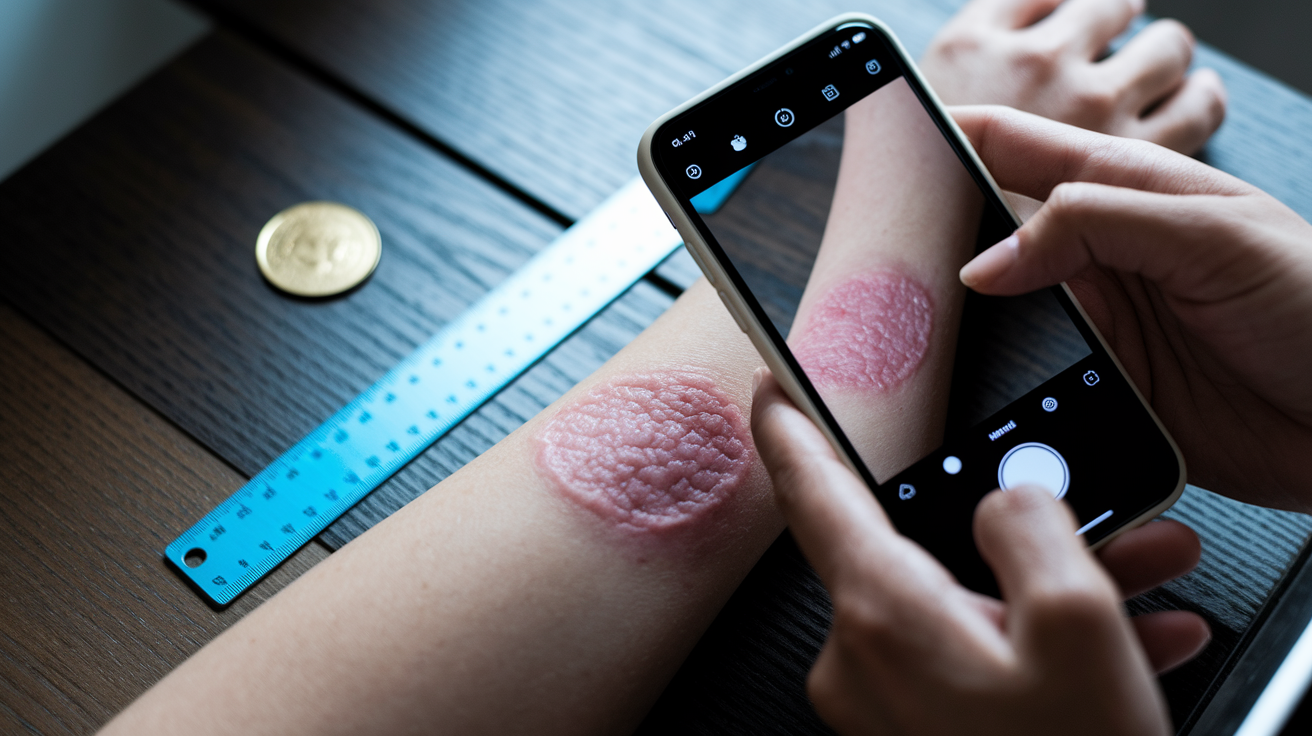
Good documentation helps clinicians diagnose a rash accurately, especially in telehealth visits or when tracking changes over time. Start by taking clear, well lit photos from multiple angles. Natural daylight or bright indoor light works best. Avoid using flash, which can wash out color and texture. Include a ruler, coin, or other familiar object next to the rash so the clinician can judge its size. Take close up shots of individual lesions and wider shots showing how much of your body is affected.
Write down when the rash started, how it has changed, and what symptoms you’ve noticed (itching, pain, burning, fever). Note any possible triggers: new foods, medications (include the name and when you started taking it), laundry detergent, soaps, outdoor exposures, insect or tick bites, recent travel, or contact with someone who was sick. List all current medications, supplements, and known allergies. This background helps clinicians distinguish between allergic reactions, infections, and autoimmune conditions.
If you’re preparing for a telehealth visit, test your camera, microphone, and internet connection ahead of time. Have your photos ready to share on screen or upload. Being organized saves time and leads to better advice.
Follow these six documentation essentials:
- Take well lit photos from multiple angles (close up and wide view) with a size reference object like a ruler or coin.
- Document the timeline: when the rash started, how it has spread or changed, and whether it’s getting better or worse.
- List current symptoms: itching, pain, fever, swelling, oozing, crusting, or other sensations.
- Note possible exposures or triggers: new medications, foods, products, outdoor activities, tick or insect bites, contact with sick individuals.
- Prepare a list of all medications, supplements, and known drug or environmental allergies.
- For telehealth visits, test your device’s camera, microphone, and connection before the appointment and have photos ready to share.
Final Words
When a rash is spreading fast, forming blisters, causing fever, or making breathing hard, get emergency care right away.
For less urgent but worrying signs, note color changes, pain, swelling, swollen lymph nodes, and whether it’s getting worse. Try basic home care for mild rashes and use telehealth if unsure. See urgent care if it continues to worsen.
Keep a simple log of when it started, what triggers it, and photos. Use this guide on how to know if a rash needs medical attention to decide next steps calmly. You’ll feel more in control and get the right care.
FAQ
Q: How to tell if a rash is serious?
A: A rash is serious when it comes with high fever, rapidly spreads, forms blisters or peels, causes facial or throat swelling, trouble breathing, fainting, severe pain, confusion, very low blood pressure, or purple/black spots.
Q: When does a rash require medical attention and when should I be worried?
A: A rash requires medical attention right away for emergency signs; seek prompt care within 24–48 hours for whole-body symptoms, growing redness or pus, persistent fever, eye or mouth involvement, or worsening despite home treatments.