

Could the foods you eat be causing your headaches?
Many people never suspect a meal, but certain foods and drinks can trigger real pain.
This post lists the usual culprits, aged cheese, processed meats, alcohol, caffeine, MSG (monosodium glutamate), and artificial sweeteners, and explains how compounds like tyramine, nitrates, and glutamate can change blood flow and nerve signals.
Did the pain start after a meal or out of the blue?
Read on to learn what to track, how to test foods safely, and simple steps that can cut down your attacks.
Fast Overview of Foods Most Likely to Trigger Headaches and How They Cause Symptoms
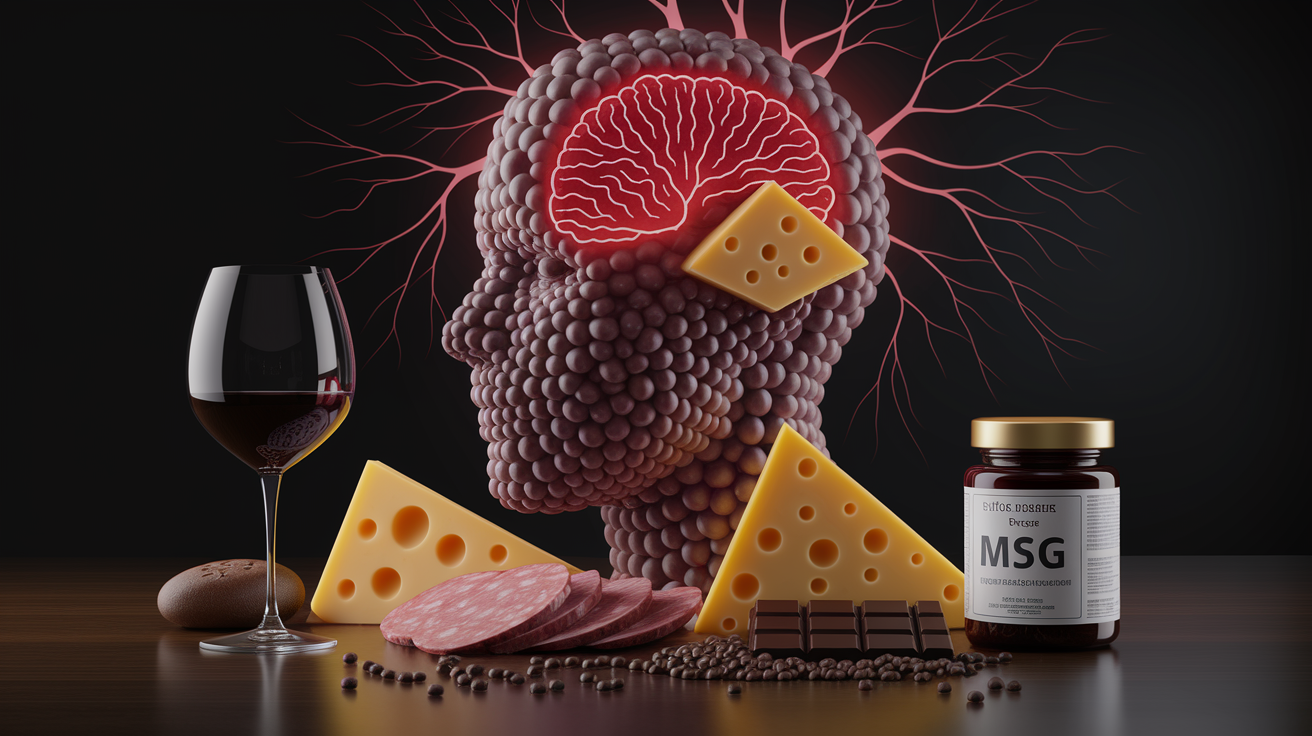
Certain foods and drinks can directly cause headaches and migraines because they contain chemicals that mess with blood vessel tone, affect how neurotransmitters work, or kick off inflammatory responses in your nervous system. About 10% of people with migraines say food is a major trigger. Roughly one-third report that alcoholic drinks, especially red wine, beer, or whiskey, bring on attacks. The usual suspects are aged or fermented foods high in tyramine, processed meats loaded with nitrates or nitrites, anything with caffeine or alcohol, foods with monosodium glutamate (MSG), and products sweetened with artificial sweeteners like aspartame.
These compounds work through different pathways. Tyramine and histamine can squeeze or relax blood vessels. Nitrates and nitrites from preservatives may expand blood vessels in a way that sets off pain. MSG affects how nerves send signals and may overstimulate them. Caffeine rapidly changes blood flow in your brain, and if you suddenly stop drinking it, you can get rebound headaches. Alcohol acts as a diuretic and may contain other trigger chemicals like tannins or sulfites.
Timing’s all over the place. Some people feel a headache within minutes of eating MSG or drinking alcohol. Others notice symptoms one to six hours after eating tyramine-rich cheese or chocolate. Sometimes, especially with triggers that pile up or caffeine withdrawal, headaches can show up 12 to 48 hours later.
The six major food trigger groups to watch are:
- Alcoholic beverages (red wine, beer, whiskey)
- Caffeinated drinks (coffee, tea, energy drinks)
- Aged cheeses (cheddar, blue cheese, parmesan)
- Processed and cured meats (bacon, hot dogs, deli meat)
- Foods with monosodium glutamate (MSG in fast food, soups, chips, soy sauce)
- Artificial sweeteners (aspartame in diet sodas, sugar-free products)
Understanding Why Certain Foods Trigger Headaches
Foods trigger headaches when they introduce or release compounds that change how your blood vessels behave or how nerve cells communicate. Tyramine, a breakdown product of the amino acid tyrosine, builds up in aged and fermented foods like aged cheeses, cured meats, soy sauce, and even overripe bananas. Tyramine can narrow blood vessels first and then cause them to widen, which may set off migraine pain pathways. Histamine, another biogenic amine, does something similar and shows up in aged wines, fermented products, and certain fish. When you eat high amounts, these chemicals can overwhelm the enzymes your body uses to break them down, especially if you naturally produce less of those enzymes.
Nitrates and nitrites are used as preservatives in bacon, hot dogs, and deli meats. They’re converted into nitric oxide in your body. Nitric oxide relaxes blood vessel walls. For some people, that relaxation triggers a headache. MSG acts on glutamate receptors in your brain and can overstimulate nerve pathways, causing what some describe as a throbbing headache behind the eyes. Caffeine’s unique because it constricts blood vessels when you first drink it, which is why it can sometimes stop a developing headache. But if you drink caffeine regularly and then skip it, your blood vessels dilate too much, and a withdrawal headache can start within 12 to 24 hours. Red wine contains polyphenols and tannins that may mess with serotonin, a neurotransmitter involved in migraine regulation.
How Biogenic Amines and Additives Affect the Brain
Biogenic amines (tyramine, histamine, and phenylethylamine) are naturally occurring chemicals formed when proteins break down during aging or fermentation. They act on receptors in blood vessel walls and on nerve cells. In people who are sensitive, these amines can trigger a cascade that includes blood vessel dilation, release of inflammatory molecules, and activation of the trigeminal nerve, which carries pain signals from your face and head. Some people have lower activity of the enzymes that normally break down these amines in the gut and liver. Even moderate amounts can build up and reach levels that cause symptoms.
Specific High-Risk Foods That Commonly Trigger Headaches
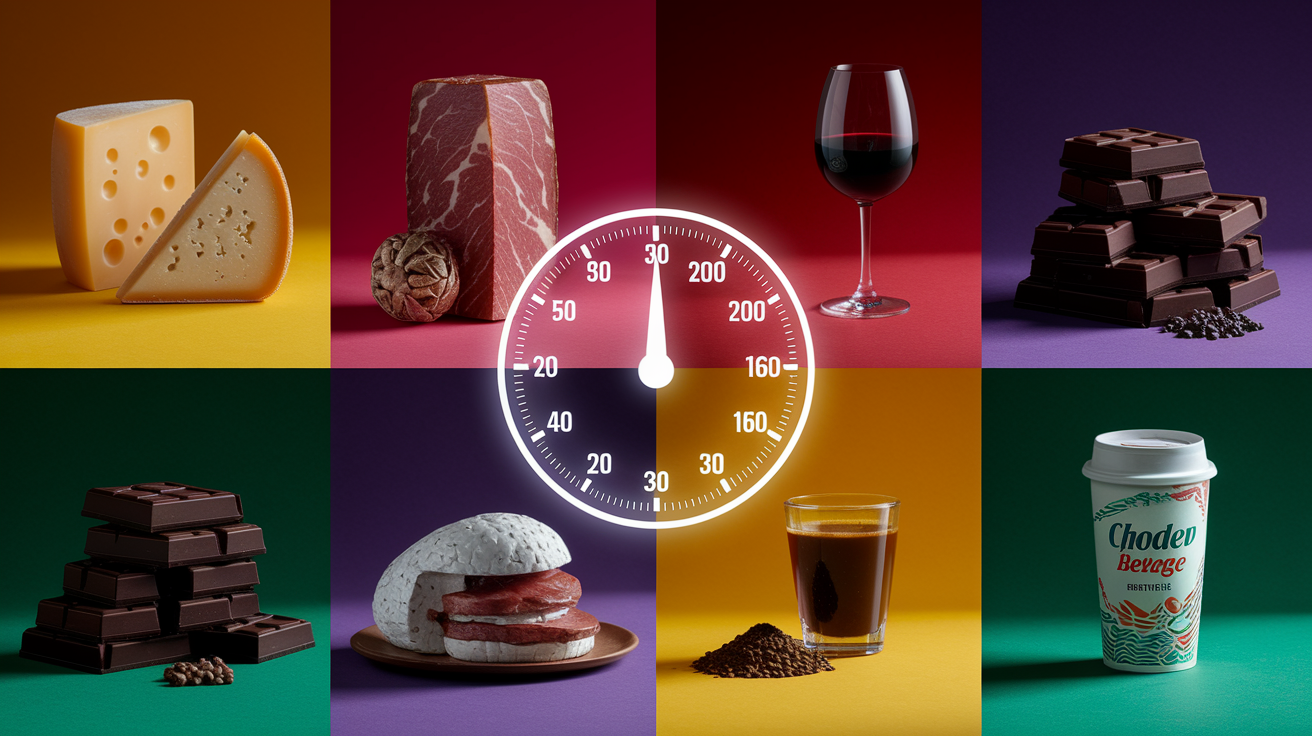
Aged cheeses are one of the most reported triggers because aging concentrates tyramine. Cheddar, blue cheese, parmesan, Swiss, and brie can all be high in tyramine. The longer a cheese ages, the more tyramine it has. Fresh cheeses like mozzarella, ricotta, and cream cheese have much lower levels and are less likely to cause problems.
Processed and cured meats (hot dogs, bacon, ham, salami, pepperoni, and many deli meats) contain nitrates or nitrites added to preserve color and prevent bacterial growth. These chemicals are converted in your body to nitric oxide, which can dilate blood vessels and trigger headaches in susceptible people. Red wine’s a well-known trigger, reported by about one-third of migraine sufferers. It contains alcohol, tannins, histamine, and sulfites. The exact culprit can vary from person to person. Beer and whiskey are also named often. Chocolate contains both tyramine and phenylethylamine, and some people react strongly to even small amounts.
Bananas are interesting because the peel has more than ten times the tyramine of the fruit pulp. If you eat bananas without washing them well or if stringy bits of peel stay on the fruit, you may ingest enough tyramine to trigger a headache. Soy sauce, teriyaki sauce, and many Asian condiments are high in both tyramine and MSG. MSG is added to many fast foods, canned soups, frozen dinners, seasoning blends, and snack chips. Studies suggest that up to 15% of people with migraines are sensitive to MSG. It can also cause cramping and diarrhea on top of headaches.
| Food | Trigger Compound | Notes |
|---|---|---|
| Aged cheese (cheddar, blue, parmesan) | Tyramine | Tyramine increases with aging time; fresh cheeses are safer |
| Processed meats (bacon, hot dogs, deli meat) | Nitrates / Nitrites | Added as preservatives; converted to nitric oxide in the body |
| Red wine, beer | Alcohol, tannins, histamine, sulfites | About 1 in 3 migraine sufferers report alcohol as a trigger |
| Chocolate | Tyramine, phenylethylamine | Dark chocolate typically has more; individual sensitivity varies |
| Soy sauce, MSG-containing foods | Tyramine, MSG (glutamate) | Linked to migraines in up to 15% of sufferers; can cause GI symptoms |
Timing: How Soon Headaches Start After Eating Trigger Foods
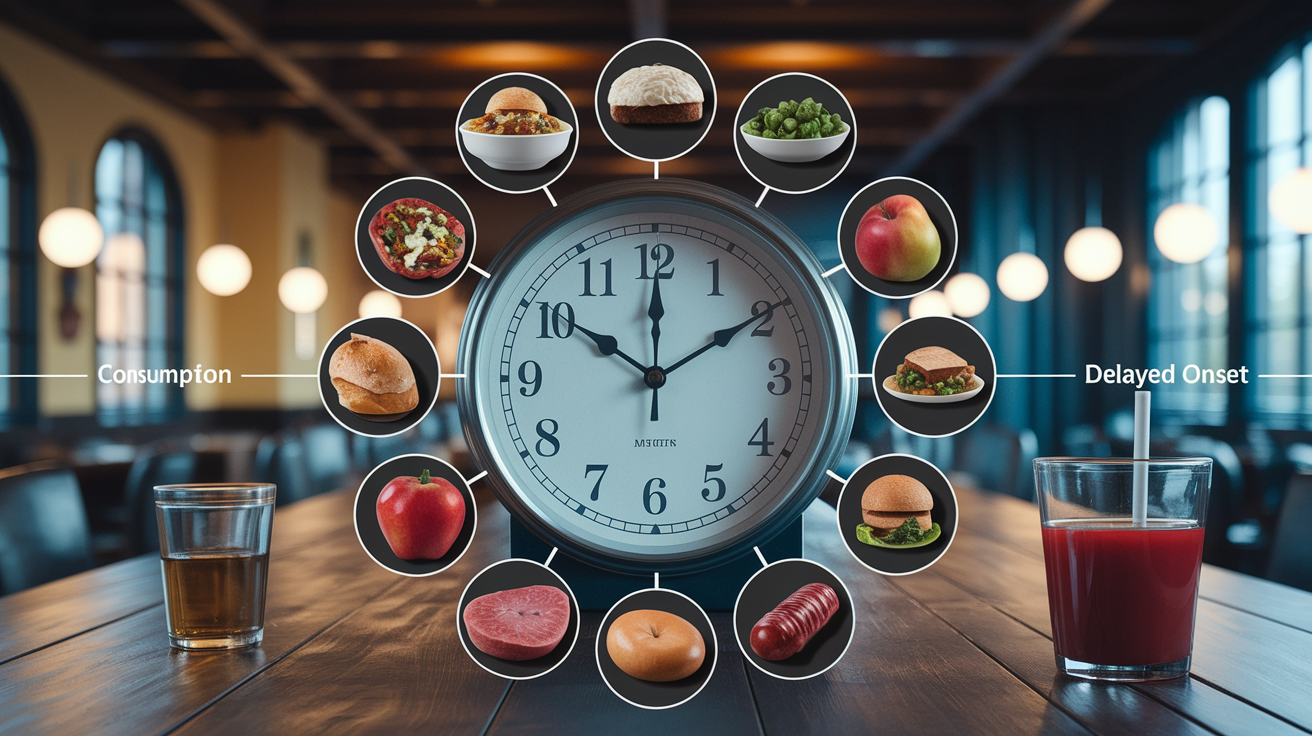
Most food-triggered headaches begin within minutes to a few hours after eating or drinking the culprit. MSG and alcohol can act fast. Some people feel a headache starting within 15 to 30 minutes. Tyramine-rich foods like aged cheese or chocolate more often cause symptoms one to six hours later, as the compound is absorbed, metabolized, and reaches levels that affect blood vessels and nerves.
Sometimes, especially when triggers pile up over several meals or days, headaches may not appear until 24 to 48 hours after exposure. This delayed onset makes it harder to connect the food to the symptom, which is why detailed tracking over weeks is often needed.
Caffeine withdrawal’s predictable in timing. If you drink coffee or tea regularly and then skip your usual intake, a withdrawal headache typically starts 12 to 24 hours later. It can build over the next day or two and may last several days if you don’t resume caffeine or taper slowly. Knowing this pattern helps separate caffeine-withdrawal headaches from other food triggers.
How to Identify Your Personal Headache Trigger Foods

The most reliable way to identify your triggers is to keep a detailed food and headache journal for at least four to eight weeks. Record everything you eat and drink, along with portion sizes, exact times, and the timing and severity of any headaches. Look for patterns. Do headaches cluster after certain meals, beverages, or restaurant visits?
Once you have baseline data, try an elimination diet. Remove one suspected trigger food or category at a time for two to six weeks. For example, eliminate all aged cheeses for four weeks while continuing to log symptoms. If headaches become less frequent or less severe, that food group’s likely a trigger for you. Then reintroduce the food in a controlled way. Eat a typical portion and watch for symptoms over the next 48 to 72 hours. If the headache returns, you’ve confirmed causation. Repeat the test to be sure.
Here’s a step-by-step identification protocol:
- Start a journal and track all foods, drinks, portion sizes, and exact timing for at least two weeks before making changes.
- Note headache onset time, severity on a 0-to-10 scale, duration, and any other symptoms like nausea or light sensitivity.
- Choose one suspected trigger category (aged cheese, processed meat, caffeine, alcohol, MSG, or artificial sweeteners) and remove it completely for four weeks.
- Continue logging during elimination to watch for improvement.
- After four weeks, reintroduce the food on a single day, in a normal portion, and monitor for 48 to 72 hours.
- If a headache occurs, wait until symptoms clear, then repeat the test to confirm.
- Move on to the next suspected trigger and repeat the process.
What to Record in a Food and Headache Journal
Your journal should capture enough detail to spot patterns your memory might miss. Write down the date and time of every meal and snack. List specific foods and portion sizes. “Two slices of cheddar cheese” is more useful than “cheese.” For caffeine, note the source and rough amount, like “12 oz coffee, regular strength” or “one can diet cola, 46 mg caffeine.” For alcohol, write the type and volume, “one 5 oz glass red wine” or “two 12 oz beers.”
Record the exact time a headache starts, its intensity on a simple 0-to-10 scale, and how long it lasts. Note any other symptoms that come with it. Nausea, vomiting, sensitivity to light or sound, visual changes, or neck pain. Track your sleep quality and hours, stress level, medications taken that day, and for menstruating individuals, the day of your cycle. All of these factors can interact with food triggers and help you and your clinician see the full picture.
Pain-Safe Food Options to Reduce Headache Risk

Pain-safe foods are those that rarely trigger headaches and provide steady nutrition without the compounds that commonly cause problems. Cooked or dried non-citrus fruits like apples, pears, apricots, and prunes are generally well tolerated. Cooked green, orange, and yellow vegetables (broccoli, carrots, sweet potatoes, zucchini, green beans) are safe staples. Citrus fruits like oranges, grapefruits, and lemons are usually fine, though a few people are sensitive to citrus. Nuts and peanuts, in moderation, are considered safe for most people and provide healthy fats and magnesium, which may help reduce migraine frequency.
Staying hydrated and eating regular, balanced meals also reduces headache risk. Dehydration and drops in blood sugar from skipped meals are common non-food headache triggers that can make you more vulnerable to food triggers. Build meals around fresh proteins, whole grains, and plenty of vegetables, and drink water throughout the day.
Safe food groups to emphasize:
- Cooked vegetables (broccoli, spinach, carrots, squash, sweet potatoes)
- Fresh or dried non-citrus fruits (apples, pears, apricots, raisins)
- Citrus fruits (oranges, grapefruits, lemons)
- Nuts and seeds (almonds, walnuts, sunflower seeds)
- Fresh, unprocessed proteins (plain chicken, turkey, fish, eggs, legumes)
Smart Food Swaps to Avoid Headache Triggers
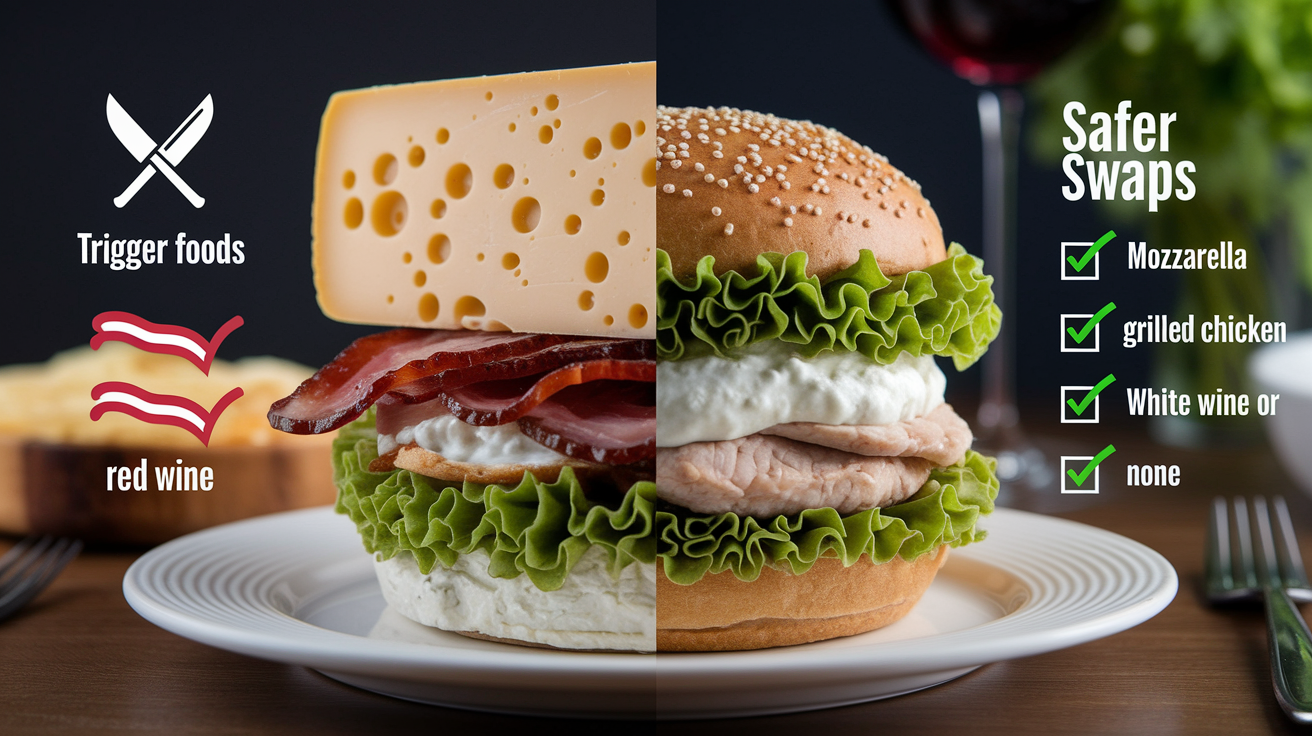
Small, practical substitutions can reduce your trigger load without overhauling your entire diet. Swap aged cheeses for unaged or fresh varieties. Choose mozzarella, ricotta, cottage cheese, or cream cheese instead of cheddar, Swiss, or blue cheese. Replace processed and cured meats with fresh, unseasoned options like plain grilled chicken, turkey breast, or roasted pork. If you love deli sandwiches, look for nitrate-free or low-sodium fresh turkey or chicken breast.
If caffeine’s a trigger or if you experience withdrawal headaches, reduce your intake gradually over one to two weeks rather than stopping abruptly. Switch to half-caff coffee, then decaf, or replace one cup of coffee with herbal tea each day. For alcohol, try low-histamine spirits like vodka or gin in moderation, or skip alcohol entirely if it consistently causes problems. When cooking, use fresh herbs, garlic, onion, and lemon juice instead of soy sauce, seasoning packets, or bouillon cubes that may contain MSG or high sodium.
Reading labels is key. Look for “monosodium glutamate,” “hydrolyzed vegetable protein,” “autolyzed yeast extract,” or “natural flavors” on ingredient lists, as these can all be sources of added glutamate. Check processed meats for “no nitrates or nitrites added” claims, though be aware some use celery powder, which naturally contains nitrates.
| Trigger Food | Safer Swap | Why It Helps |
|---|---|---|
| Aged cheddar, blue cheese | Fresh mozzarella, ricotta | Low tyramine content; not aged or fermented |
| Bacon, deli meat, hot dogs | Plain grilled chicken, fresh turkey breast | No added nitrates or nitrites; lower sodium |
| Soy sauce, teriyaki sauce | Fresh lemon juice, garlic, herbs | Avoids tyramine and MSG; adds flavor naturally |
| Red wine | White wine, clear spirits, or none | Lower tannins and histamine; or removes alcohol trigger entirely |
Meal Timing, Hydration, and Lifestyle Factors That Interact With Food Triggers
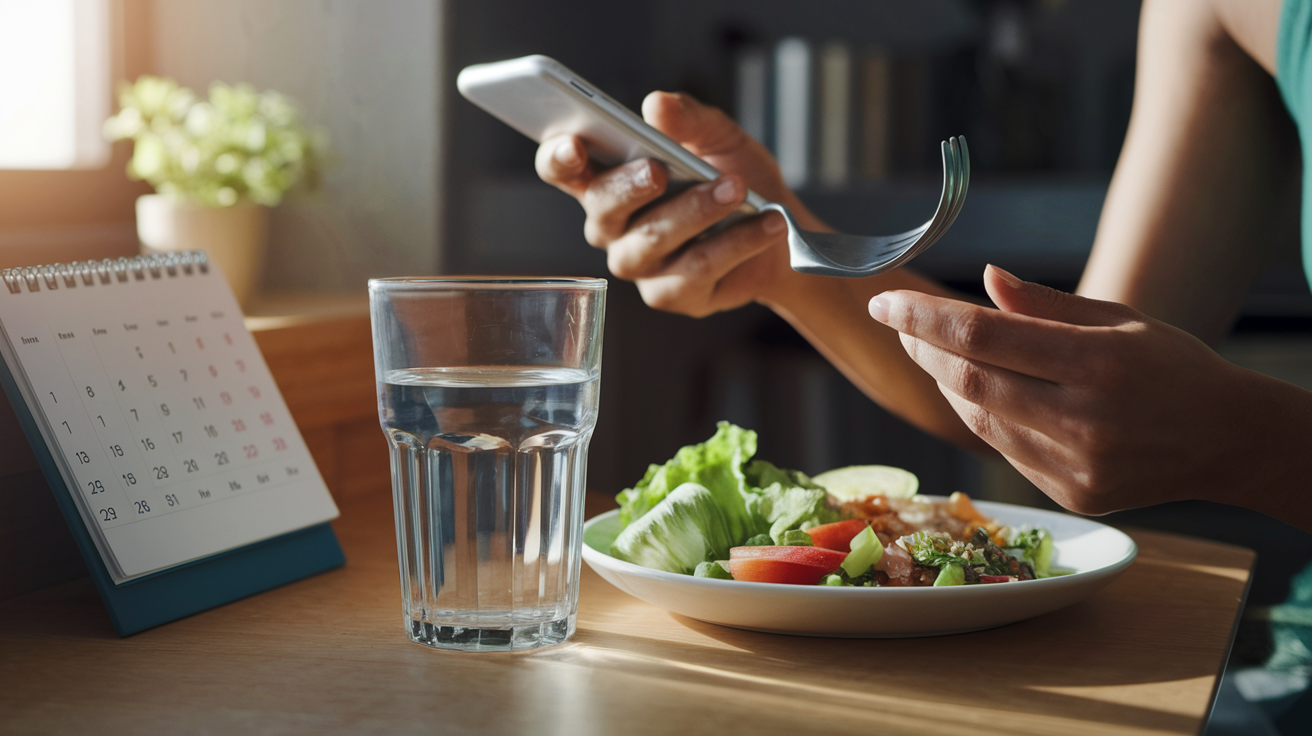
Skipping meals or going too long between eating can drop your blood sugar and make you more vulnerable to food-triggered headaches. Low blood sugar itself can cause headaches, and when combined with a dietary trigger, symptoms may be worse or come on faster. Aim to eat every three to five hours during the day, and include a mix of protein, healthy fat, and complex carbohydrates to keep blood sugar steady.
Dehydration lowers your headache threshold. Even mild dehydration can make you more sensitive to triggers like caffeine, alcohol, or MSG. Drink water consistently throughout the day, and increase intake if you exercise, spend time in heat, or drink alcohol or caffeine, which both have diuretic effects. Poor sleep and high stress also amplify how strongly you react to food triggers. Stress raises cortisol and can change how your nervous system processes pain signals, while lack of sleep disrupts neurotransmitter balance and vascular regulation. Prioritize seven to nine hours of sleep per night and use stress-reduction strategies like regular exercise, breathing exercises, or short walks to keep your baseline headache risk lower.
When to Seek Medical Care for Food-Triggered Headaches

If you have frequent headaches (more than a few per month) or if they’re severe enough to disrupt work, school, or daily life, see a healthcare provider. Persistent headaches may signal an underlying condition that needs medical evaluation, and food triggers may be only part of the picture. Bring your food and headache journal to the appointment so your clinician can review patterns and help you interpret the data.
Some warning signs require urgent evaluation and shouldn’t be dismissed as simple food triggers:
- Sudden, severe headache that peaks within seconds to minutes (thunderclap headache)
- Headache with fever, stiff neck, confusion, vision changes, weakness, numbness, or difficulty speaking
- Headache after a head injury
- New or different headache pattern in someone over age 50, or any significant change in your usual headache type
If elimination diets and journaling are overwhelming or unclear, ask your provider about working with a dietitian who specializes in migraine or headache management. Sometimes medication or supplements like magnesium or riboflavin may help reduce migraine frequency alongside dietary changes.
Final Words
in the action, this post laid out common culprits, how they work, and when symptoms usually start, from MSG and tyramine to alcohol and caffeine timing.
You also got a step-by-step way to find your personal triggers, pain-safe food ideas, simple swaps, and lifestyle tips like meal timing and hydration to lower risk.
Keep a short food and headache log, try swaps slowly, and share patterns with your clinician if headaches persist. With a little tracking, you can reduce episodes and feel more in control of headache triggers food.
FAQ
Q: What foods can trigger headaches?
A: The foods that can trigger headaches include alcohol (especially red wine), aged cheeses, processed meats with nitrates, chocolate, MSG-containing foods, and artificial sweeteners like aspartame.
Q: What are the 5 C’s to avoid migraines?
A: The 5 C’s to avoid migraines are chocolate, aged cheese, cured meats, caffeine, and citrus. These common dietary triggers are worth tracking during an elimination test.
Q: What is the 5 4 3 2 1 rule for migraines?
A: The 5 4 3 2 1 rule for migraines is a grounding technique: name 5 things you see, 4 you touch, 3 you hear, 2 you smell, and 1 you taste to reduce anxiety and distract from pain.
Q: Can aspartame cause headaches?
A: Aspartame can cause headaches for some people; research is mixed. If you suspect it, stop intake for 1 to 2 weeks and track symptoms to see if they improve.