

Could the weather, your laundry detergent, or a crooked septum be the reason for that pressure across your forehead and cheeks?
A sinus headache happens when the air pockets in your skull (sinuses) swell or get blocked and fluid or pressure builds.
Knowing the usual triggers, like seasonal allergies, infections, structural issues, irritants, and barometric shifts, lets you prevent flares and pick simple relief.
Read on to learn which triggers likely apply to you and what to try next.
Key Factors That Commonly Trigger a Sinus Headache
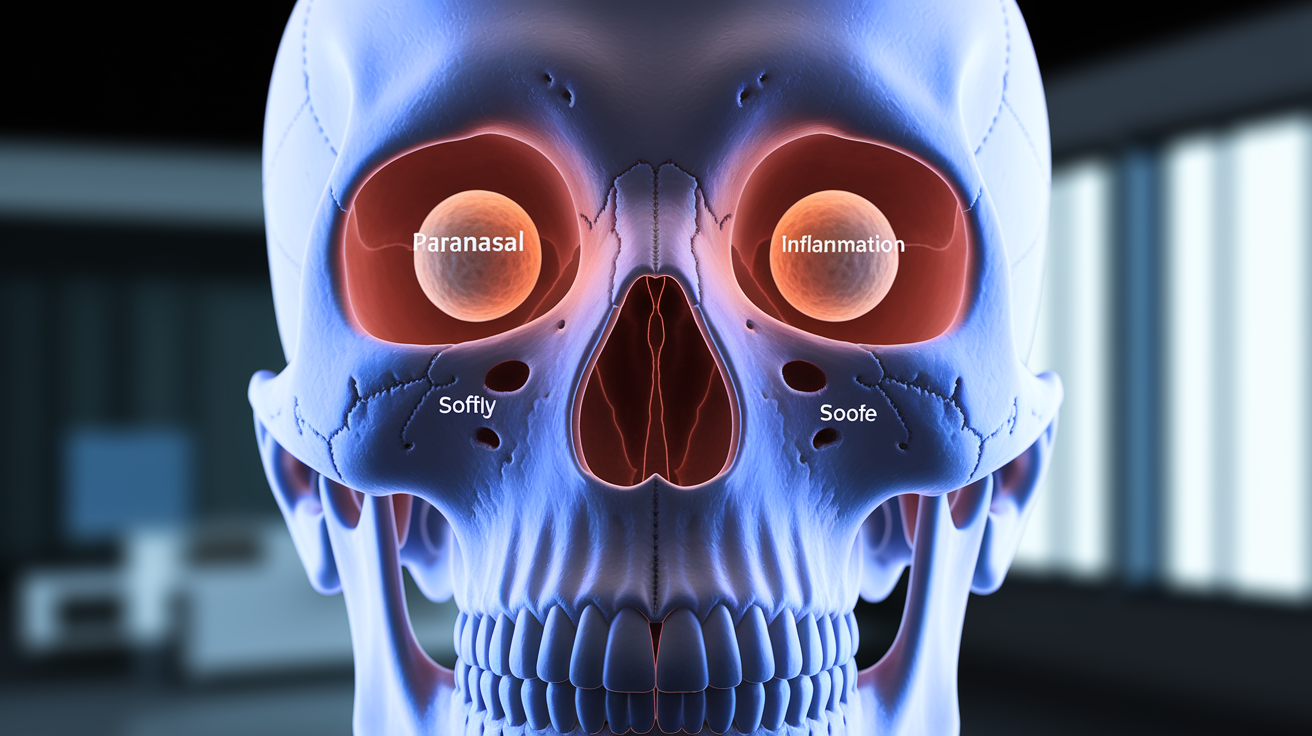
A sinus headache shows up when the four pairs of air-filled cavities in your skull get inflamed or blocked. When normal drainage stops working, pressure builds inside those sinuses. You’ll feel it across your forehead, cheeks, the bridge of your nose, or behind your eyes. That pressure gets worse when you bend forward or lie down because gravity and position shift the fluid that’s already trapped in congested spaces.
The usual suspects fall into a few groups. Allergens that make your nasal lining swell. Infections that fill your sinuses with thick mucus. Anything that irritates or inflames the tissue inside your nose and sinus passages. When those small openings that connect your sinuses to your nasal cavity get blocked, even partly, mucus can’t drain right and pressure starts building. Inflammation is the common thread, whether it’s coming from pollen, a cold virus, or chemical fumes you breathed in at work.
Sinus headaches can also develop from structural problems inside your nose, environmental shifts like a sudden weather front moving through, or lifestyle patterns that thicken mucus or dry out your nasal membranes. Understanding which triggers apply to you makes it easier to avoid flares and pick the right next steps.
Common sinus headache triggers include:
- Allergies to pollen, dust mites, pet dander, or mold
- Viral and bacterial infections that inflame sinus linings
- Structural issues such as a deviated septum or nasal polyps
- Irritants like tobacco smoke, pollution, and strong chemical odors
- Weather changes that cause rapid shifts in barometric pressure
- Lifestyle factors including dehydration and dry indoor air
How Allergies Trigger Sinus Headache Pressure
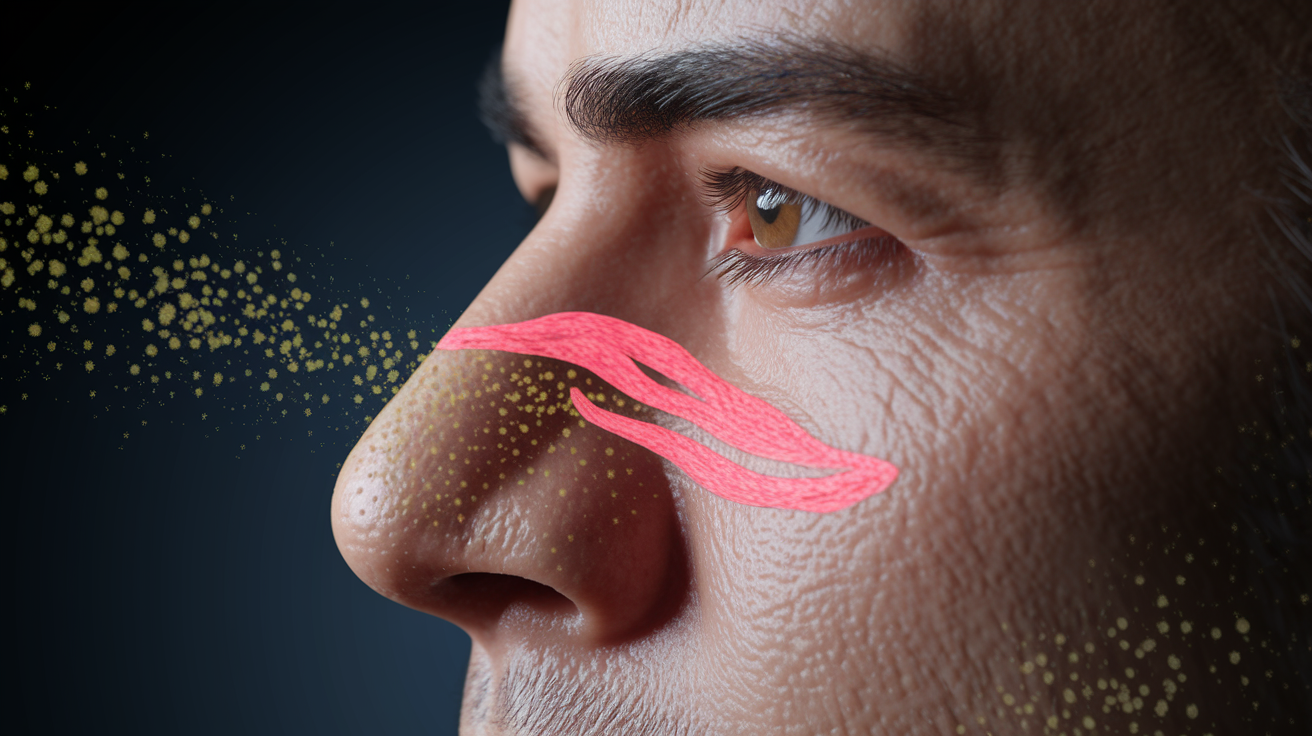
When you inhale an allergen, your immune system treats it as a threat. It releases histamine and other chemicals that make your nasal tissues swell. That swelling narrows the pathways between your nasal cavity and your sinuses, trapping mucus inside. The trapped mucus thickens. The buildup of fluid and pressure creates that aching sensation you feel across your face. Allergic rhinitis is one of the most frequent reasons people develop recurring sinus headaches, especially during spring and fall when tree and grass pollen counts spike.
Year-round allergens can be just as bad. Dust mites thrive in bedding and upholstered furniture. Pet dander circulates in homes with cats or dogs. Mold spores grow wherever moisture collects, from bathrooms to basements. If you notice headaches that start after spending time in certain rooms or after sleeping, allergens in your immediate environment might be the trigger.
Common allergens that trigger sinus pressure:
- Seasonal pollen from trees, grasses, and weeds
- Dust mites living in mattresses, pillows, and carpets
- Pet dander from cats, dogs, and other furry animals
- Mold spores in damp indoor spaces
Identifying Your Allergy Patterns
Pay attention to when your symptoms flare. If headaches cluster in spring or fall, pollen’s a likely cause. If they happen year-round or worsen at night and in the morning, think about what’s in your bedroom. Tracking the timing, severity, and any nasal symptoms alongside the headache helps you identify patterns.
Using a HEPA filter in your bedroom traps airborne allergens. Encasing your mattress and pillows in allergen-proof covers keeps dust mites away from your face while you sleep. Washing your bedding weekly in hot water, at least 130°F, kills mites and removes pollen that settles on fabric. These steps reduce your allergen exposure and can lower how often you get allergy-driven sinus headaches.
Infection-Related Triggers Behind Sinus Headaches
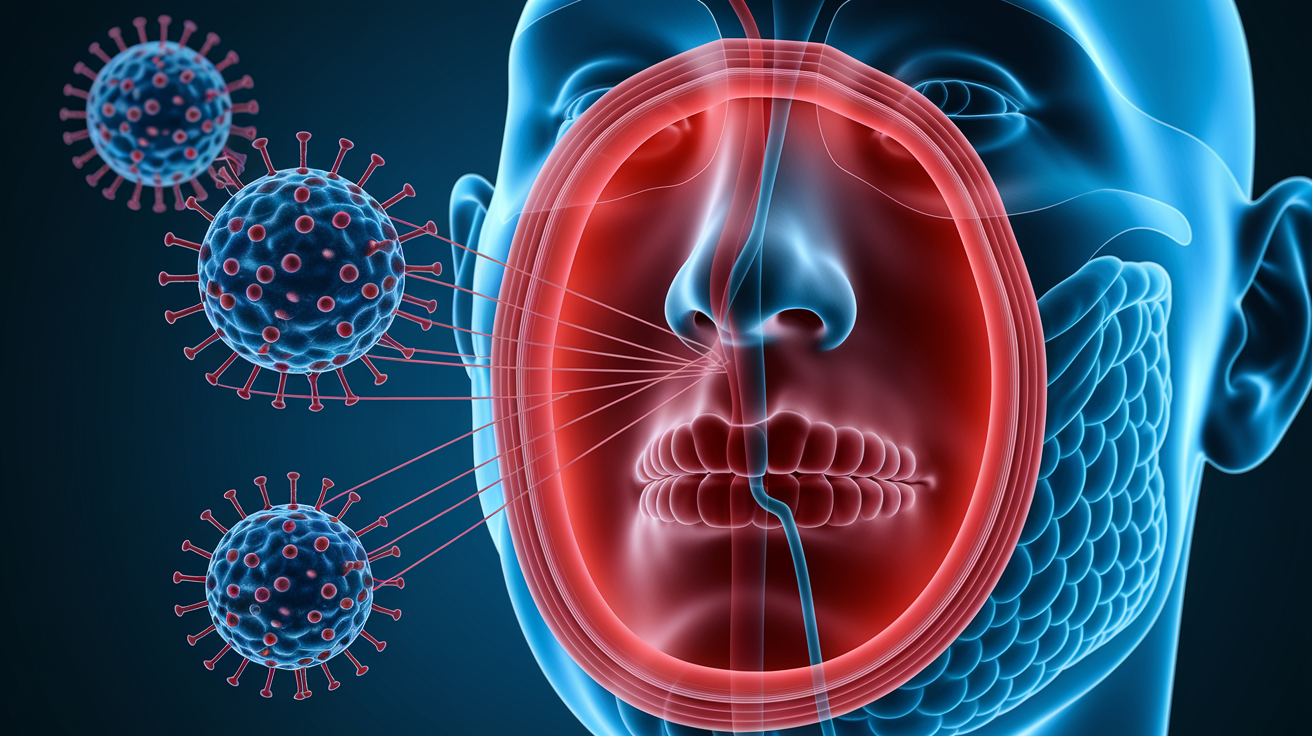
Infections are one of the most common reasons sinus pressure turns into a headache. Most sinus infections start with a viral upper respiratory infection, the common cold. The virus inflames the lining of your nose and sinuses, causing swelling and increased mucus production. As drainage pathways narrow, mucus accumulates and pressure builds. Most viral infections improve on their own within seven to ten days.
Sometimes a bacterial infection follows the viral phase. Bacteria thrive in the warm, blocked environment of a congested sinus. The infection shifts from clear or white mucus to thick, yellow or green discharge. You may also notice worsening facial pain, fever, and fatigue. Bacterial sinusitis is more likely if your symptoms last longer than ten days without any sign of improvement, or if you develop severe symptoms early. Think high fever and heavy purulent drainage that lasts three to four consecutive days.
Chronic sinusitis is different. It lingers for more than twelve weeks and can cause a low-grade, persistent headache along with ongoing nasal congestion and a reduced sense of smell. Inflammation stays active even without an acute infection. Structural problems or untreated allergies often play a role in keeping it going.
| Infection Type | Duration | Typical Clues |
|---|---|---|
| Viral (common cold) | Less than 4 weeks, usually 7–10 days | Clear or white nasal discharge, mild facial pressure, improves on its own |
| Bacterial | Less than 4 weeks | Thick yellow or green discharge, symptoms persist >10 days or severe onset with fever ≥39°C (102.2°F) |
| Subacute | 4–12 weeks | Symptoms that linger after an acute infection but don’t fully resolve |
| Chronic | More than 12 weeks | Persistent nasal congestion, reduced smell, facial pressure or fullness, often with structural or allergic factors |
Structural Issues That Can Trigger Sinus Headaches
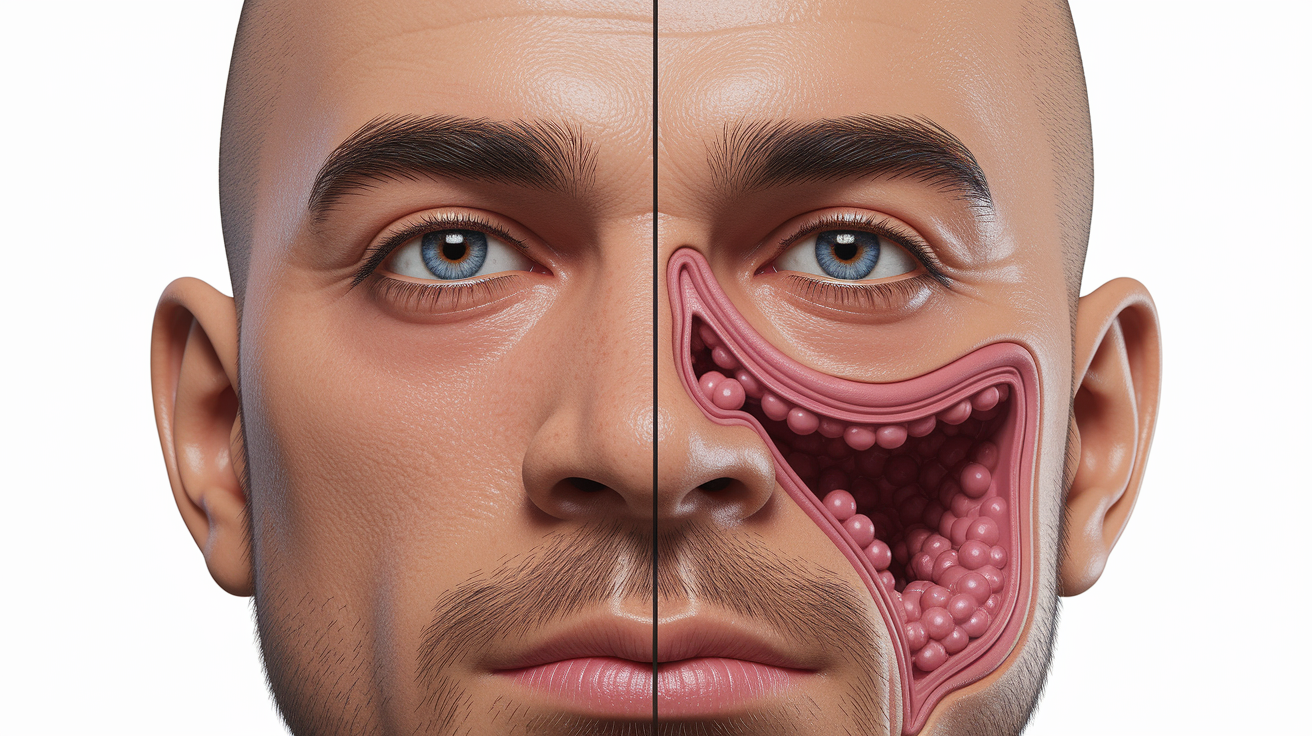
Sometimes the problem isn’t what you breathe in. It’s the shape of the passages inside your nose. A deviated septum, the wall of cartilage and bone that divides your nasal cavity, can block one or both sides and prevent normal mucus drainage. Nasal polyps, soft noncancerous growths that form on the lining of your sinuses or nasal passages, can also obstruct airflow and trap mucus. Both conditions make it easier for infections to take hold and harder for pressure to resolve on its own.
Dental infections are another overlooked cause of sinus pain. The roots of your upper back teeth sit close to the floor of your maxillary sinuses, the ones in your cheeks. An infected tooth, a deep cavity, or even recent dental work can refer pain to that sinus area. The pain might feel exactly like a sinus headache, especially if there’s swelling or pus that spreads into the sinus itself.
Structural triggers include:
- Deviated nasal septum that narrows drainage pathways
- Nasal polyps that block sinus openings
- Dental infections or abscesses in upper teeth that refer pain to the sinuses
Environmental and Air Quality Triggers for Sinus Headaches

Breathing in irritants can inflame your nasal lining just as well as an allergen or an infection. Tobacco smoke, whether you smoke yourself or breathe secondhand smoke, irritates the mucous membranes and thickens mucus. Vehicle exhaust, industrial fumes, and wood smoke from fireplaces or wildfires all carry fine particles that trigger inflammation and congestion. If you work around chemicals, solvents, or strong cleaning agents, occupational exposure can be a daily trigger.
Strong fragrances, even pleasant ones like perfume, scented candles, or air fresheners, can provoke sinus irritation in sensitive people. The volatile compounds in these products reach the nasal lining quickly and can cause swelling and increased mucus production. Some people notice headaches within minutes of exposure.
Mold spores are both an allergen and an irritant. High humidity or water damage creates ideal conditions for mold growth indoors. Breathing mold spores inflames your nasal passages and sinuses, worsening congestion and increasing the risk of headache. Controlling indoor moisture and cleaning visible mold promptly can reduce this trigger.
Weather, Pressure, and Climate Triggers of Sinus Headaches

Changes in barometric pressure, the weight of the air around you, can trigger sinus pain even when your sinuses are otherwise healthy. When a weather front moves through and pressure drops rapidly, the air pressure inside your sinuses may not equalize quickly if the small openings are already narrowed by swelling or mucus. The pressure difference creates a squeezing or pulling sensation. Same thing happens during air travel, especially during descent, or when you drive through mountains and change altitude quickly.
Cold air can dry out and irritate the lining of your nose and sinuses. Breathing in cold, dry air causes your mucous membranes to produce more mucus to protect themselves. That extra mucus can lead to congestion and pressure. Dry indoor air has a similar effect. When indoor humidity drops below 30 percent, nasal tissues dry out, mucus thickens, and drainage slows. The ideal range for indoor humidity is 30 to 50 percent.
High humidity, especially in warm climates, can also be a problem. It encourages mold growth and can make the air feel heavy, which some people find worsens their sense of congestion and pressure. Rapid swings in temperature or humidity, even within the same day, can destabilize your sinuses and trigger a headache.
Weather-related triggers include:
- Sudden drops or rises in barometric pressure before storms
- Air pressure changes during flights or altitude shifts
- Cold outdoor air that dries nasal membranes
- Very low indoor humidity, below 30 percent
- High outdoor humidity that promotes mold and feels oppressive
How Pressure Changes Affect Sinus Cavities
Your sinuses are hollow spaces normally filled with air at the same pressure as the air outside your body. When outside pressure drops suddenly, the air inside your sinuses wants to expand. If the small openings that connect your sinuses to your nasal cavity are blocked by swelling or mucus, the pressure can’t equalize. The trapped, expanding air pushes against the sinus walls, causing pain. The reverse happens when pressure rises quickly, squeezing the air inside. Keeping your nasal passages clear and well-hydrated makes it easier for pressure to balance and reduces the pain that comes with weather or altitude changes.
Lifestyle Factors That Can Trigger or Worsen Sinus Headaches
Dehydration thickens your mucus, making it harder to drain from your sinuses. When mucus gets thick and sticky, it clogs the narrow openings more easily and pressure builds faster. Drinking enough water, about two to three liters a day for most adults, helps keep mucus thin and flowing. If you notice your headaches worsen when you haven’t been drinking much, dehydration might be part of the problem.
Stress doesn’t directly cause sinus inflammation. But it can make you more aware of discomfort and can increase muscle tension in your face, neck, and shoulders. That tension can amplify the sensation of pressure and make a mild sinus headache feel worse. Hormonal fluctuations, especially during pregnancy or menstrual cycles, can also affect how much your nasal tissues swell. Pregnancy, in particular, can cause persistent nasal congestion and increase the chance of sinus headaches even without an infection.
| Factor | Effect on Sinuses |
|---|---|
| Dehydration | Thickens mucus, slows drainage, increases congestion and pressure |
| Stress | Amplifies perception of pain, increases facial and neck muscle tension |
| Hormonal changes | Can cause nasal tissue swelling, especially during pregnancy or menstrual cycle |
| Intense exercise in cold or dry air | Can dry nasal passages and trigger temporary congestion or pressure |
Distinguishing Sinus Headaches From Migraine or Tension Headaches

True sinus headaches require sinus symptoms. You should have nasal congestion, thick yellow or green nasal discharge, a reduced sense of smell, and facial pain or pressure that gets worse when you bend forward. The pain is usually steady and localized around your forehead, cheeks, or the bridge of your nose. If those nasal symptoms are absent or very mild, the headache’s more likely a migraine or a tension headache.
Migraines can mimic sinus pain surprisingly well. They often cause pressure around the eyes and can produce nasal congestion, a runny nose, and watery eyes because of how the trigeminal nerve, which controls sensation in your face, is involved in migraine attacks. Studies suggest that roughly 80 percent of people who think they have a sinus headache actually have a migraine or a tension headache. One helpful clue is the color of your nasal mucus. Clear or slightly white mucus suggests a noninfectious cause, which points away from bacterial sinusitis and makes migraine or tension headache more likely.
| Headache Type | Key Features | Nasal Symptoms? |
|---|---|---|
| Sinus headache | Constant pressure or pain in face, worsens with bending forward, localized to sinus areas | Yes—congestion, thick yellow or green discharge, reduced smell |
| Migraine | Often one-sided, throbbing or pulsating, nausea, sensitivity to light and sound, may have aura | Sometimes mild congestion or runny nose, but discharge is typically clear |
| Tension headache | Band-like tightness around head, steady pressure, muscle tenderness in neck or scalp | No nasal discharge or sinus-specific pressure |
Prevention Strategies for Reducing Sinus Headache Triggers

Preventing sinus headaches means reducing inflammation and keeping your nasal passages clear. Saline nasal irrigation is one of the most effective home measures. Use sterile, distilled, or previously boiled and cooled water. A typical rinse uses 240 to 500 milliliters, about 8 to 16 ounces, per nostril. Rinsing once or twice a day during a flare helps flush out mucus, allergens, and irritants. Regular use can also reduce the frequency of headaches if you’re prone to congestion.
Keeping indoor humidity between 30 and 50 percent prevents your nasal membranes from drying out and helps mucus stay thin. Use a humidifier during dry seasons or in heated homes, and clean it regularly to prevent mold buildup. Staying hydrated with about two to three liters of water daily supports mucus flow. If allergies are a known trigger, use HEPA air filters, encase your mattress and pillows, and wash bedding weekly in hot water to reduce allergen exposure.
Tracking your symptoms can reveal patterns you might otherwise miss. Note when headaches start, how severe they are, what you were doing beforehand, and any nasal symptoms or environmental changes. Over time, you may see that headaches cluster after exposure to certain rooms, foods, weather changes, or stress. That information helps you adjust your environment and habits to avoid known triggers.
Practical preventive habits include:
- Rinse nasal passages with saline 1–2 times daily during flares
- Maintain indoor humidity at 30–50 percent with a clean humidifier
- Drink 2–3 liters of water daily to keep mucus thin
- Use HEPA filters and allergen-proof bedding covers
- Avoid smoke, strong fragrances, and known irritants
- Track symptom timing, severity, and triggers in a simple log
- Wash bedding weekly in hot water to reduce dust mites and pollen
Treatment Options When Sinus Headache Triggers Lead to Symptoms

When a sinus headache starts, over-the-counter pain relievers like acetaminophen or ibuprofen can reduce discomfort. Intranasal corticosteroid sprays such as fluticasone, budesonide, or mometasone reduce inflammation in your nasal passages and sinuses. You may feel some relief within one to three days, but full benefit usually takes one to two weeks of regular use. These sprays work best when used consistently, not just when symptoms flare.
Oral decongestants like pseudoephedrine can shrink swollen nasal tissues and improve drainage. A common dose is 60 milligrams every four to six hours, with a maximum of about 240 milligrams per day. Avoid oral decongestants if you have uncontrolled high blood pressure or certain heart conditions. Topical nasal decongestant sprays, such as oxymetazoline, work faster but must be limited to three days or less. Using them longer can cause rebound congestion, where your nasal passages swell even more when the medication wears off.
Antibiotics are only appropriate when a bacterial infection is confirmed or strongly suspected. That typically means symptoms lasting more than ten days without improvement, or a severe onset with high fever at or above 39 degrees Celsius, about 102.2 degrees Fahrenheit, and heavy purulent nasal drainage for three to four consecutive days. Most sinus headaches follow viral infections and don’t require antibiotics. When antibiotics are needed, amoxicillin-clavulanate is often the first choice, though local guidelines may vary.
Common treatments include:
- Over-the-counter pain relievers for symptom relief
- Intranasal corticosteroid sprays for inflammation
- Saline irrigation to flush mucus and irritants
- Oral or topical decongestants, used within recommended limits
- Antibiotics only when bacterial infection is suspected based on duration or severity
Safe Use of Decongestants
Topical nasal decongestant sprays like oxymetazoline shrink blood vessels in your nasal lining quickly, opening your airways within minutes. But if you use them for more than three days in a row, your body adapts and blood vessels swell more when the spray wears off. That rebound congestion can become worse than the original problem. Limit these sprays to three days or less. Use them only when you need fast relief for a specific event or to break a severe flare.
Oral decongestants like pseudoephedrine don’t cause rebound congestion, but they can raise blood pressure and heart rate. Follow the dosing limits on the package, usually 60 milligrams every four to six hours, up to 240 milligrams per day. If you have high blood pressure, heart disease, or thyroid problems, check with a clinician before using oral decongestants regularly.
When Sinus Headache Triggers Signal a Need for Medical Care
Most sinus headaches improve with home care and time, especially if they follow a viral cold. But if your symptoms last longer than ten days without any improvement, or if they start to get better and then suddenly worsen, it’s time to see a doctor. That pattern suggests a bacterial infection or another complication that needs medical evaluation and possibly antibiotics.
Urgent care or an emergency visit is warranted if you develop a high fever of 39 degrees Celsius or higher, severe unrelenting facial pain, swelling around your eyes, vision changes, or neurological symptoms like confusion, weakness, or a stiff neck. These signs can indicate a serious infection spreading beyond the sinuses, and they require immediate attention.
Red flags that require prompt medical care:
- Symptoms lasting more than 10 days without improvement
- Fever at or above 39°C (102.2°F)
- Swelling, redness, or pain around the eyes
- Vision changes or double vision
- Severe headache unlike any you’ve had before, confusion, neck stiffness, or other neurological symptoms
Final Words
You’ve read how sinus pain often feels, pressure in the forehead, cheeks, bridge of the nose, or behind the eyes that gets worse when you bend forward. The post covered main trigger groups: allergies, infections, structural issues, irritants, weather, and lifestyle.
It also walked through prevention, home relief, and when to seek care. Track timing, triggers, how bad it is, and any nasal signs like thick discharge or fever.
If you’re still wondering what triggers sinus headache, start with simple tracking and try saline rinses and humidity control. Small steps often bring big relief.
FAQ
Q: How do I stop a sinus headache?
A: Stopping a sinus headache involves easing nasal congestion and pressure with saline nasal irrigation, warm compresses, short-term oral decongestants or OTC pain relievers, and intranasal steroid sprays; see a clinician if symptoms last over 10 days.
Q: What can be mistaken for sinus headache?
A: Several conditions can be mistaken for a sinus headache, most often migraine or tension headaches, but also dental or TMJ pain, eye strain, and cluster headaches—check for nasal signs to tell them apart.
Q: What is the cause of a sinus headache?
A: A sinus headache is caused by inflamed or blocked sinus passages that trap mucus and raise pressure; common causes include viral or bacterial infections, allergies, nasal polyps or deviated septum, irritants, and pressure changes.
Q: How long do sinus headaches typically last?
A: Sinus headaches typically last days to weeks: viral-related pain usually clears in 7–10 days, bacterial infections persist beyond 10 days, and chronic sinusitis causes symptoms that last more than 12 weeks.