

Think your favorite comfort food will calm an upset stomach?
It can make things worse.
When your stomach is queasy, what you eat matters, and some foods settle things fast while heavy, greasy meals slow digestion and increase nausea.
Did it start after a meal, or out of the blue?
This quick guide gives easy, gentle choices you can try right away (ginger, crackers, broth, bananas), explains why they help, and tells when to call a health care provider.
Best Foods to Eat When You Feel Nauseous (Quick Relief Guide)
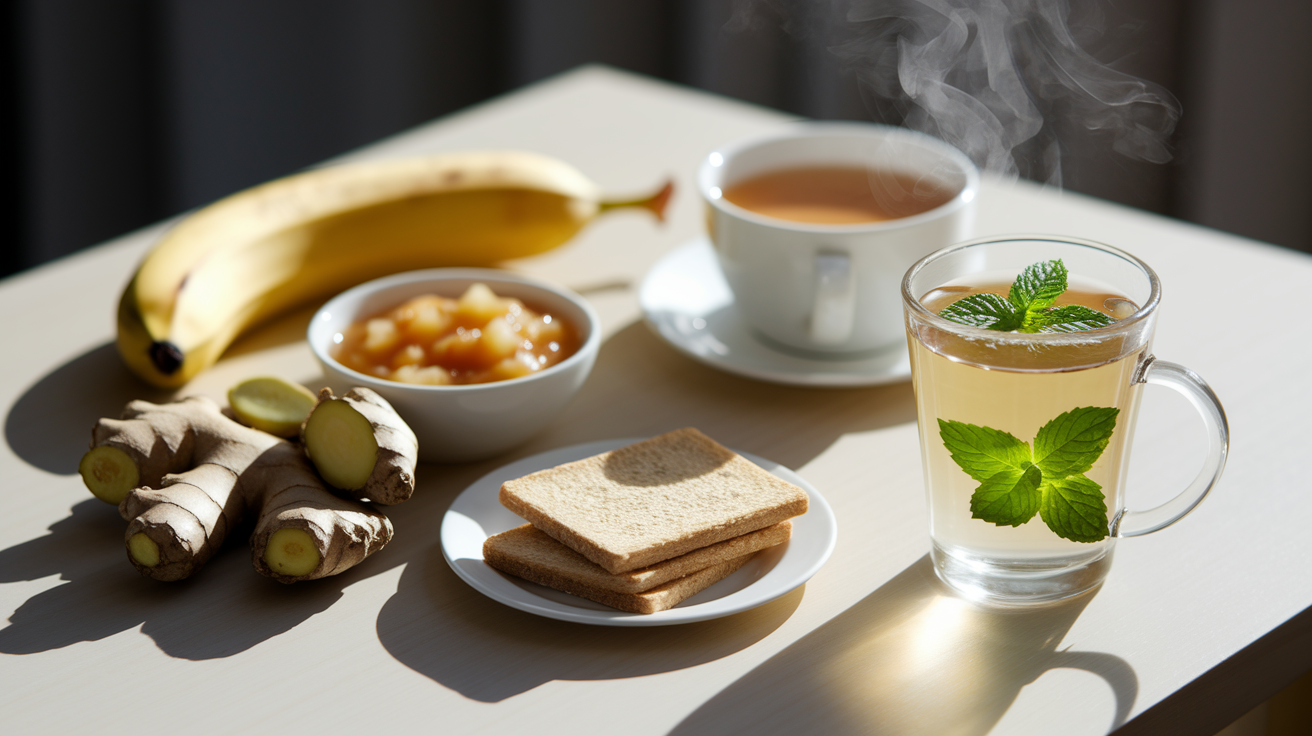
When your stomach’s upset, the right foods actually matter. Gentle, low fat, mild options help because they move through your stomach faster and don’t irritate the lining. High fat or heavy meals slow down gastric emptying, so they just sit there and make nausea worse. Aromas count too. Strong cooking smells or pungent spices can trigger queasiness before you even take a bite.
Texture and temperature play a role. Cold or room temperature foods often have less smell, which makes them easier to tolerate when even thinking about a hot meal makes you feel worse. Simple carbs and proteins that digest easily give your body energy without demanding too much work from your system.
Foods that can help ease nausea:
- Ginger – Works on serotonin receptors in the gut to reduce nausea. Try fresh ginger tea, ginger ale made with real ginger, gingersnaps, or grated ginger in broth.
- Crackers – Plain saltines or dry crackers absorb stomach acid and settle things down. Keep a few by your bed to eat before you get up.
- Toast – Bland, easy to digest, and absorbs excess acid. Plain white or wheat toast works best without butter.
- Bananas – Gentle on the stomach and replace potassium lost from vomiting. Soft, starchy, naturally sweet without being overpowering.
- Applesauce – Provides light fiber to help clear nausea causing chemicals. Easier to tolerate than whole fruit when solid food feels difficult.
- Broth – Chicken or vegetable broth keeps you hydrated, provides sodium and electrolytes, and it’s easy to sip. Choose low fat versions to avoid slowing digestion.
- Peppermint tea – Soothes the stomach and the aroma can reduce nausea. Drink it warm or let it cool if hot liquids make symptoms worse.
- Electrolyte drinks – Sports drinks or coconut water replace salts lost from vomiting and prevent dehydration. Sip slowly instead of drinking large amounts at once.
- White rice – Plain, starchy, binding. A small portion of plain rice can help settle your stomach after vomiting.
- Oatmeal – Mild, filling, easy to digest. Make it with water instead of milk if dairy worsens your nausea, and skip added sugar or toppings.
Start with small portions and eat slowly. Sip warm broth throughout the day instead of gulping it down. Use fresh ginger shavings in hot water for quick homemade tea. Choose low fiber fruits like bananas and applesauce over raw apples or fibrous vegetables when your stomach’s sensitive. If you can’t keep solids down, try sipping apple juice or ginger tea until you feel ready for crackers or toast.
Foods to Avoid When You’re Nauseous

Certain foods make nausea worse because they slow down digestion or irritate your stomach lining. High fat foods take longer to leave your stomach, which means they sit there and increase that queasy, heavy feeling. Spicy dishes can inflame the digestive tract. For many people, dairy triggers more nausea, especially if there’s any lactose sensitivity. Acidic foods can also prompt vomiting because they increase stomach acid production.
Strong smells from greasy or heavily seasoned foods can trigger nausea before you even eat. When your stomach’s already unsettled, avoid anything that demands extra digestive effort or adds irritation.
Foods and drinks that worsen nausea:
- Greasy or fried foods – French fries, fried chicken, heavy fast food. They slow stomach emptying and make you feel fuller and queasier.
- Spicy meals – Hot peppers, curry, heavily seasoned dishes irritate the digestive lining and can trigger vomiting.
- Heavy dairy – Milk, cream based soups, rich cheeses are harder to digest when you’re nauseous. Some people tolerate small amounts of plain yogurt, but full fat dairy often makes things worse.
- Citrus fruits – Oranges, grapefruits, acidic juices can increase stomach acid and worsen nausea. Lemon water is sometimes helpful for some people, but large amounts of citrus often backfire.
- Caffeine – Coffee, energy drinks, caffeinated sodas can irritate your stomach and increase jitteriness, which makes nausea feel worse.
- Alcohol – Even small amounts irritate the digestive tract and can worsen dehydration, nausea, and vomiting.
Nausea Relief Foods for Specific Situations

Pregnancy Nausea
If you’re pregnant and dealing with morning sickness, foods rich in vitamin B6 can help reduce nausea. Bananas, fortified cereals, sunflower seeds, pistachios, poultry, and salmon are all good sources. B6 is commonly recommended during early pregnancy because it seems to calm the digestive system.
Ginger is considered safe during pregnancy and has a long history of use for nausea relief. Try ginger tea, ginger candies, or small amounts of fresh ginger grated into oatmeal or smoothies. Verify that ginger ale or ginger snacks contain real ginger, not just ginger flavoring.
Keep bland snacks like crackers or dry toast by your bedside and eat a few pieces before you get up in the morning. Small, frequent meals throughout the day help more than large meals. Aim for about 60 grams of protein each day to stabilize digestion. Try hard boiled eggs, peanut butter, Greek yogurt, or small portions of baked chicken. If nausea is severe or you can’t keep fluids down, contact your health care provider. They can discuss vitamin B6 supplementation or prescription options.
Nausea from Illness
When you’re sick with a stomach bug, food poisoning, or another illness, hydration is the priority. Vomiting and diarrhea can quickly lead to dehydration, so sip fluids throughout the day. Broth, electrolyte drinks, coconut water, and sports drinks help replace lost salts and fluids.
Once you can tolerate liquids, try bland, easy to digest foods. The BRAT diet (bananas, rice, applesauce, and toast) is a classic starting point. These foods are starchy, low in fiber, and gentle on an irritated stomach. Add small portions of plain protein like baked chicken or tofu once you feel ready.
Avoid fatty, spicy, or heavily seasoned foods until your stomach has fully settled. If you can’t keep anything down for more than 24 hours, or if you notice signs of dehydration like dizziness, dark urine, or a rapid heartbeat, seek medical care.
Motion Sickness
For motion sickness, ginger and peppermint are your best options. Ginger in any form (tea, candies, or ginger beer) can reduce queasiness during travel. Peppermint tea or peppermint candies also help settle the stomach.
Eat a light snack before you travel instead of going on an empty stomach or eating a heavy meal. A small serving of crackers, toast, or a banana gives your stomach something to work with without overloading it. Avoid reading or looking at screens while in motion. If you know you’re prone to motion sickness, consider taking an over the counter anti nausea medication before your trip starts.
When to Seek Medical Care for Nausea

If nausea lasts longer than 48 hours without improvement, contact a health care provider. Persistent nausea can signal an infection, pregnancy complication, gastric inflammation, or another condition that needs evaluation. Don’t wait if you can’t keep fluids or food down for an extended period. Dehydration can become serious quickly.
Watch for signs of dehydration: very low urine output, dark yellow or brown urine, dizziness or lightheadedness when standing, a rapid heartbeat, or confusion. These are red flags that you need medical attention.
Seek urgent care or call 911 if you experience severe abdominal pain, blood in your vomit or stool, a high fever, chest pain, fainting, or confusion. If you faint from nausea or vomiting, call 911 immediately. Pregnant individuals who suspect hyperemesis gravidarum (severe, persistent vomiting that prevents normal eating and drinking) should contact their clinician right away. If nausea started after beginning a new medication or after a head injury, get medical advice as soon as possible.
Why These Foods Work: Simple Science Behind Nausea Relief

Nausea happens when your digestive system slows down, when your brain receives signals from the gut that something’s wrong, or when sensory triggers like smell or taste overstimulate nausea centers in the brain. Gastric emptying (the speed at which food leaves your stomach) plays a big role. When food sits in your stomach too long, you feel fuller, queasier, and more likely to vomit.
Ginger influences gastrointestinal serotonin receptors, which are involved in the nausea response. That’s why even small amounts of ginger tea or ginger candy can quickly reduce queasiness. Bland carbs like crackers, toast, and rice stabilize blood sugar and absorb stomach acid without demanding heavy digestive work. They move through your stomach efficiently and give you energy without irritation. Peppermint may relax the smooth muscles in your stomach and intestines, which can ease cramping and reduce the sensation of nausea. Together, these foods work by calming the digestive tract, reducing sensory triggers, and supporting steady, gentle digestion.
Final Words
You now have a short list of quick, gentle choices, like ginger, crackers, broth, peppermint, and bland carbs, plus simple prep tips to try when your stomach feels off. These choices aim to calm nausea, keep you hydrated, and give gentle energy.
We also covered what to avoid, tailored tips for pregnancy, illness, or motion sickness, and clear red flags that need medical attention.
Use this as a starting plan for foods that ease nausea and to help you feel steadier soon. Small steps add up.
FAQ
Q: What foods neutralize nausea?
A: The foods that neutralize nausea include bland, low-fat, easy-to-digest options like crackers, toast, bananas, applesauce, plain rice, oatmeal, broth, ginger, peppermint tea, and electrolyte drinks to calm the stomach.
Q: What settles nausea quickly? How do you settle a queasy stomach fast? What reduces the urge to vomit?
A: To settle nausea quickly, sip clear fluids, try ginger or peppermint, nibble bland crackers or toast, breathe slowly and rest upright; stop eating if vomiting continues and seek care if symptoms are severe.