

What if the right position could stop bloating and trapped gas in minutes?
This quick guide shows the best position to relieve gas and simple moves that push trapped air along so you feel better fast.
You’ll learn easy poses to try right now, how long to hold them, and when to pick a lying, sitting, or standing option.
Did it start after a meal, during exercise, or just while you were sitting?
Try a short flow of positions for 5 to 10 minutes and you can often feel instant relief.
Fast-Acting Body Positions That Help Relieve Gas Immediately
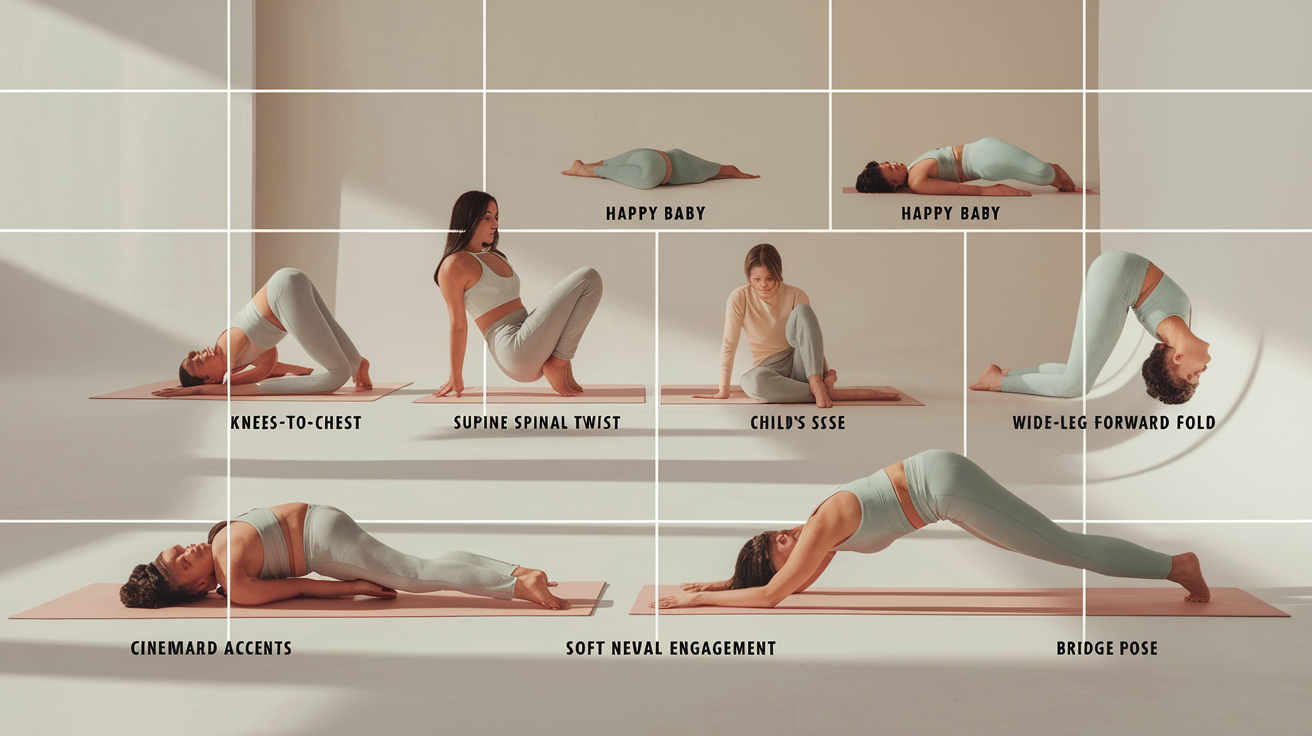
The quickest relief comes from positions that compress or rotate your abdomen, which pushes trapped gas through your intestines and out. These poses mix gentle belly pressure with stretching and breathing so you can pass gas more easily and get rid of that tight, bloated feeling.
Hold each position for 30 to 60 seconds, or take 5 to 7 slow, deep breaths while you’re in it. Breathing slowly relaxes your abdominal muscles and gives the gas time to shift.
Knees-to-chest: Lie on your back, pull both knees up toward your chest, and hold them there.
Happy baby: Lie on your back, bend your knees to 90 degrees, open them wide, and hold the outsides of your feet or ankles.
Supine spinal twist: Lie flat, keep your shoulders down, and lean both bent knees to one side, then the other.
Seated twist: Sit with your legs crossed or one knee crossed over the other, twist your torso gently to one side, then repeat on the other.
Child’s pose: Kneel, sit back on your heels, and fold your torso forward with your arms stretched out in front.
Wide-leg forward fold: Stand with your feet wider than your shoulders and fold forward from the hips, letting your upper body hang.
Downward dog: Start on your hands and knees, then lift your hips up and back into an inverted V shape.
Bridge pose: Lie on your back with your knees bent and feet flat, then lift your hips up toward the ceiling.
You can move through these in a short flow, spending 30 to 60 seconds on each, for rapid relief. A full cycle takes around 5 to 10 minutes and can help when gas is making you uncomfortable.
Why These Gas-Relief Positions Work on the Digestive Tract

Gas forms in your intestines from swallowed air and from bacteria breaking down carbs that didn’t digest fully in your small intestine. Passing gas is normal, about 13 to 21 times a day, but sometimes gas gets trapped and causes bloating or sharp pain. Positions that compress, twist, or stretch your abdomen help gas move along by changing the pressure inside your belly and loosening muscles that might be holding it in place.
Compression squeezes the intestines gently, pushing pockets of gas forward. Spinal rotation shifts and massages the organs from side to side, helping bubbles break free. Hip loosening releases tension in your lower back and pelvis, which can relax the digestive tract. Breath-induced relaxation slows your nervous system and reduces stress, which can ease cramping and help your gut work better.
When you combine these mechanisms, the gas that’s stuck near a bend or kink in your intestines gets a better chance to move. The positions also improve blood flow to your abdominal organs and can release natural chemicals that help digestion, which may speed up relief from bloating and trapped gas.
Lying-Down Modifications for Easier Gas Relief

Lying positions change the way gravity and internal pressure act on your intestines. Some angles make it easier for gas to travel toward the exit. When you lie down after eating or when bloated, the way you position your body can either trap more gas or help it move along.
Left-side lying with optional knee pillow. Lie on your left side and rest your top knee on a small pillow. This angle helps gas flow through the colon toward the rectum and complements the twisting positions from earlier by keeping your abdomen relaxed and open.
Gentle lower-body rotation while lying on the side. Lie on your side and slowly roll your hips forward and back, or let your top leg slide forward a little. This creates a mild twist without forcing your spine, similar to the supine twist but softer and easier to hold longer.
Light abdominal compression using pillow support. Lie on your side and hug a pillow into your lower belly, applying gentle pressure. This mimics the compression from knees-to-chest without needing to hold your legs up, so it’s more comfortable for longer relief sessions.
Breathe slowly and deeply while you’re in any of these positions. Each exhale can help relax your abdomen a little more.
This section focuses on lying-down variations you can use when standing or kneeling isn’t comfortable, or when you want relief while resting. They build on the core poses but let you stay horizontal and still get the compression or rotation you need.
Gentle Movement Techniques That Encourage Gas Release
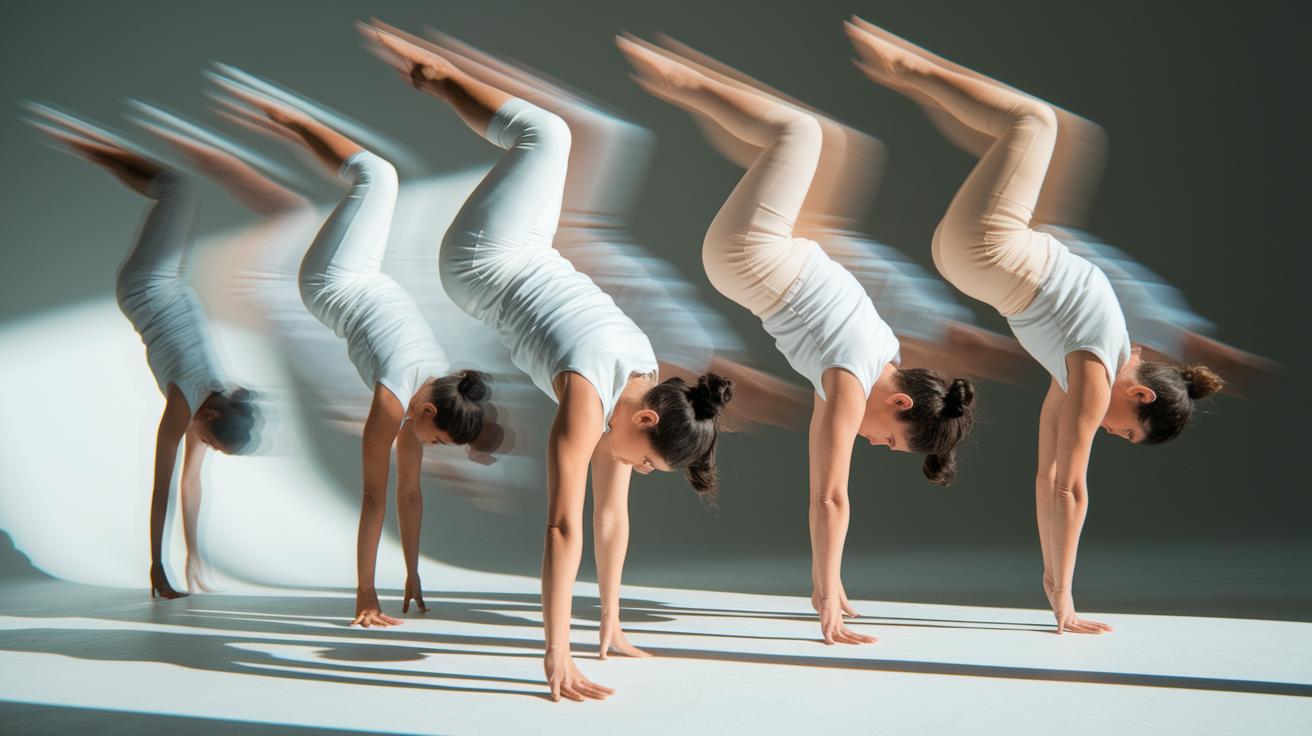
Motion helps intestinal gas move because it creates rhythmic pressure changes inside your abdomen and keeps muscles from staying tight in one position. Small, repeated movements can be easier to do than holding a static stretch, and they add a massage-like effect that can unstick trapped gas.
Cat-cow. On your hands and knees, arch your back down as you breathe in, then round it up as you breathe out, moving your spine in a slow wave.
Bicycle legs. Lie on your back and move your legs in a slow cycling motion, as if you’re pedaling a bike in the air.
Pelvic tilts. Lie on your back with your knees bent, then gently tilt your pelvis to flatten your lower back against the floor and release, repeating in a slow rhythm.
Rhythmic hip circles. Stand or kneel and move your hips in slow circles, first one direction, then the other.
Gentle standing side-bends. Stand with your feet hip-width apart and lean slowly to one side, then the other, reaching one arm overhead to stretch the side of your body.
Do each movement for about 30 to 60 seconds. You’re not trying to hold a pose here, just keep things moving gently. That motion helps gas bubbles shift and merge, making them easier to release.
Sitting and Standing Positions That Help You Pass Gas More Easily

Upright positions keep your digestive tract aligned and reduce the compression that can happen when you slouch or lie flat too soon after eating. Staying upright for a little while after a meal gives gravity a chance to help food and gas move downward, and certain postures make it easier for gas to exit.
| Position | How to Do It | Why It Helps |
|---|---|---|
| Sitting upright | Sit with your back straight, feet flat on the floor, and avoid leaning back or slouching. | Keeps your intestines unkinked and reduces pressure on your stomach and colon. |
| Deep squat | Stand with feet hip-width or wider, then lower your hips toward the floor, opening your knees and keeping your heels down if you can. | Changes the angle of your rectum and relaxes your pelvic floor, making it easier to pass gas. |
| Standing with slight forward lean | Stand and lean forward gently at the hips, resting your hands on your thighs or a counter for support. | Creates mild abdominal compression and opens your lower back, helping gas move forward. |
After you eat, try to stay sitting or standing for at least 30 minutes instead of lying down right away. If you do need to sit for a long time, shift your weight or stand and stretch every 20 minutes or so to keep things moving inside.
Sleep-Focused Strategies for Reducing Gas Overnight

The way you sleep can make a difference in how much gas builds up overnight and how comfortable you feel in the morning. When you lie flat on your back or stomach right after a meal, gas can get stuck in your intestines and cause bloating or cramping that wakes you up.
Sleep on your left side with your knees slightly bent, which helps gas move through your colon more easily. Use a pillow between your knees to keep your hips and lower back relaxed and prevent twisting that can compress your belly. Avoid lying flat on your back for long periods, especially if you’ve eaten within a few hours of bed. Don’t sleep on your stomach, because that position compresses your abdomen and can trap gas or push it back up.
Try to finish eating at least 2 to 3 hours before you go to bed. That gives your stomach time to empty and reduces the chance that undigested food will ferment and create extra gas while you sleep. If you do feel bloated at bedtime, spend a few minutes in one of the lying-down relief positions before you settle in for the night.
Pregnancy-Safe Modifications for Gas Relief

Pregnancy increases gas production because rising progesterone relaxes the smooth muscles in your digestive tract, slowing everything down. Gas often starts around week 11 and can persist through all three trimesters. Many people pass gas about 18 times a day during pregnancy, and it’s common to feel bloated or uncomfortable, especially as the uterus grows and presses on your intestines.
Side-lying modification. Lie on your left side with a pillow under your top knee and another between your knees. This is safe throughout pregnancy and helps gas move without putting pressure on your back or major blood vessels.
Cat-cow modification. Do the same arching and rounding motion on your hands and knees, but move more slowly and avoid deep belly compression. This is gentle enough for all trimesters.
Child’s pose modification. Widen your knees to make room for your belly, and don’t fold as deeply. Rest your forehead on a pillow or bolster if it’s more comfortable.
Supported squat. Hold onto a sturdy chair or countertop and lower into a gentle squat, keeping your heels down if you can. This helps open your pelvis and ease gas without straining.
Early-pregnancy knees-to-chest variation. In the first and early second trimester, you can still lie on your back and pull your knees gently toward your chest. Stop this position once lying flat on your back becomes uncomfortable or your provider advises against it.
Early-pregnancy happy baby variation. Same timing, hold your feet or ankles and open your knees wide while lying on your back. Skip this one later in pregnancy when lying flat isn’t safe.
Avoid deep twists, lying flat on your back for more than a few minutes after the first trimester, lying on your stomach, and any pose that causes dizziness, shortness of breath, or sharp pain.
Stop any position immediately if you feel lightheaded, have trouble breathing, or notice bleeding or cramping that doesn’t go away. If gas pain is severe or comes with other symptoms like fever, vomiting, or a change in your bowel habits, contact your provider.
Infant Gas Relief Positions for Caregivers

Babies swallow air while feeding and crying, and their digestive systems are still learning how to move gas through. Newborns and young infants often get uncomfortable from trapped gas, especially after feeds or during the evening hours.
Tummy time. Lay your baby on their stomach on a firm, flat surface for a few minutes while you watch them. The gentle pressure on their belly can help push gas out.
Bicycle legs. Lay your baby on their back and gently move their legs in a slow cycling motion, one knee up toward the belly, then the other.
Upright burping hold. Hold your baby upright against your chest with their chin resting on your shoulder, and gently pat or rub their back to encourage burps and gas release.
Over-shoulder burping. Drape your baby over your shoulder so their belly is lightly compressed, and pat their back in a slow, rhythmic pattern.
Rocking carry. Hold your baby belly-down along your forearm, with their head in your hand and their legs straddling your elbow, and rock or walk gently. This position combines light abdominal pressure with motion.
If your baby is crying inconsolably, has a hard or swollen belly, isn’t passing gas or stool, or shows signs of pain that don’t get better with these positions, reach out to your pediatrician.
Complementary Remedies That Enhance Position-Based Gas Relief
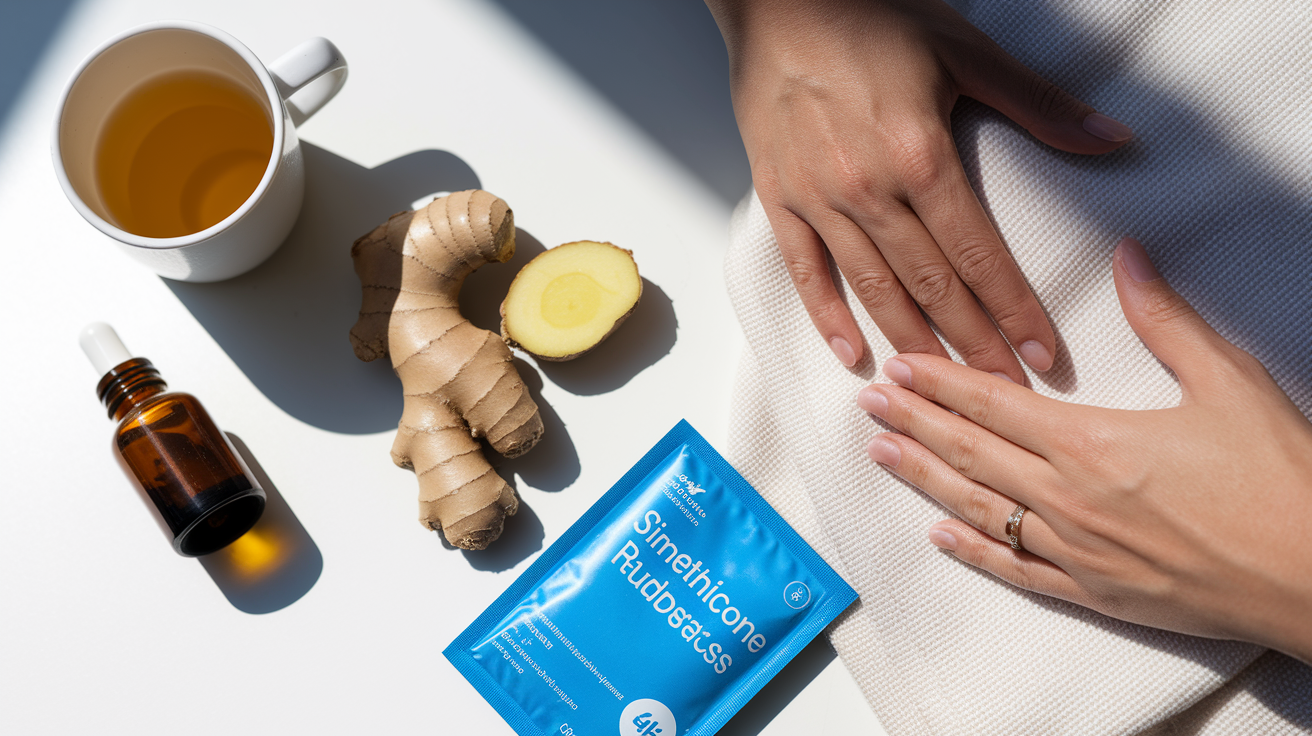
Positions work best when you pair them with other simple measures that help gas move or reduce the amount of gas your body makes. These remedies don’t replace the positions but can make relief faster and more complete.
Walking for 5 to 10 minutes after a meal keeps your intestines active and helps gas move along. A warm compress on your lower belly relaxes tight muscles and can ease cramping while you’re holding a position. Drinking warm water or herbal tea, especially peppermint or ginger tea, soothes your digestive tract and may help gas pass more easily. Peppermint has natural antispasmodic properties that can relax intestinal muscles. Ginger can speed up stomach emptying and reduce bloating. Eating slowly and chewing thoroughly reduces the amount of air you swallow with your food.
Over-the-counter options like simethicone can help break up gas bubbles so they’re easier to pass. If you’re considering supplements like peppermint oil, ginger capsules, or digestive enzymes, talk to your provider first to make sure the dose is right and there are no interactions with other medications.
Remedies plus positions are most effective when gas is mild to moderate and related to a recent meal, swallowed air, or foods that are hard to digest. If you’re dealing with constant bloating or pain that doesn’t respond to these measures, it’s worth looking into possible food intolerances or digestive conditions like IBS.
When Gas Pain Requires Medical Attention

Most gas pain is harmless and goes away with simple relief measures, but sometimes what feels like trapped gas is actually a sign of something more serious. If your pain is unusually intense, lasts more than a few hours, or keeps coming back, it’s not typical gas.
Watch for severe pain that doesn’t ease with position changes or over-the-counter remedies. Persistent vomiting or nausea that stops you from keeping fluids down. Blood in your stool or black, tarry stools. Unexplained weight loss over a few weeks or months. Fever along with abdominal pain or bloating.
Conditions like appendicitis, bowel obstruction, gallstones, or inflammatory bowel disease can cause symptoms that mimic gas pain. If you have sudden, sharp pain in one spot, pain that gets worse when you move or press on your belly, or any of the warning signs listed above, get medical care right away.
Final Words
Try a compression or twist right away. Knees-to-chest, child’s pose, or a gentle spinal twist often bring the quickest relief.
Hold each for 30-60 seconds or 5-7 deep breaths, and move through a short flow if that helps. Add lying-down tweaks, standing or sitting options, or gentle movements like leg cycling when needed. Pair positions with warm sips, walking, or an over-the-counter option for more help.
If pain is severe, bloody, or comes with fever, get care. The best position to relieve gas is the one that feels comfortable and works for you—keep trying until you find it.
FAQ
Q: How do you relieve gas immediately? What position releases the most gas? How to get unbloated in 5 minutes?
A: Relieving gas immediately means using positions that compress or rotate the abdomen, like knees-to-chest, child’s pose, or squatting, plus walking and deep belly breaths, and hold each 30 to 60 seconds or 5 to 7 breaths.
Q: What does trapped gas feel like?
A: Trapped gas feels like a crampy, sharp, or pressurey pain in the belly, often with bloating, rumbling, and the urge to burp or pass gas; the pain commonly shifts or eases with movement.