

Could something you ate today be the reason for that pounding headache?
Food often starts headaches for people who are sensitive.
Aged cheeses, processed meats, red wine, chocolate, and caffeine are common suspects.
The hard part is timing, a trigger can cause pain in 30 minutes or several hours later.
That delay makes it hard to link a meal to your symptoms.
This post shows how to spot likely food triggers, keep a simple tracking diary, and test foods safely so you only avoid what truly affects you.
Identifying the Most Common Food Headache Triggers

Certain foods pack active compounds that mess directly with blood vessels and brain signaling. Tyramine, histamine, nitrates, and caffeine get the most research attention. These substances make blood vessels in your brain dilate or squeeze shut fast, setting off pain signals if you’re sensitive. Biogenic amines like tyramine and phenylethylamine form naturally when food ferments, ages, or breaks down protein. That’s why aged and preserved stuff usually tops the trigger list.
You’ll typically feel symptoms within hours of eating a problem food, though timing isn’t always predictable. Some people get a throbbing headache 30 minutes after red wine. Others won’t feel the effects of aged cheese or processed meat until several hours pass. The delay makes it tough to connect symptoms to a specific meal, especially if you ate multiple triggers in one sitting.
The most common food headache triggers include:
- Aged cheeses (cheddar, blue cheese, parmesan) contain high tyramine levels that affect vascular tone and neurotransmitter release
- Caffeinated beverages (coffee, tea, soda) because caffeine influences adenosine receptors. Both overuse and withdrawal can kick off attacks
- Processed meats (bacon, sausages, hot dogs) get preserved with nitrates and nitrites that dilate blood vessels
- Chocolate has phenylethylamine and caffeine, both capable of altering blood pressure and vascular function
- Citrus fruits (oranges, lemons, grapefruits) where acidity and specific plant compounds may irritate gut–brain signaling in some people
- Alcohol, especially red wine brings histamine, sulfites, and tannins together to trigger vascular and inflammatory responses
- Nuts and seeds (peanuts, walnuts) may contain tyramine and other bioactive compounds that sensitize pain pathways
- Fermented foods (soy sauce, kimchi, sauerkraut) run high in histamine produced during fermentation
- Artificial sweeteners (aspartame, sucralose) might affect neurochemical balance if you’re sensitive
- Dairy products (milk, yogurt, cheese) where proteins and lactose can trigger reactions in people with intolerance or sensitivity
Individual sensitivity varies wildly. You might handle chocolate fine but react strongly to red wine, while someone else experiences the opposite. Identifying your personal triggers requires systematic observation and tracking rather than avoiding every item on a generic list.
Understanding Why Food Headache Triggers Affect the Brain
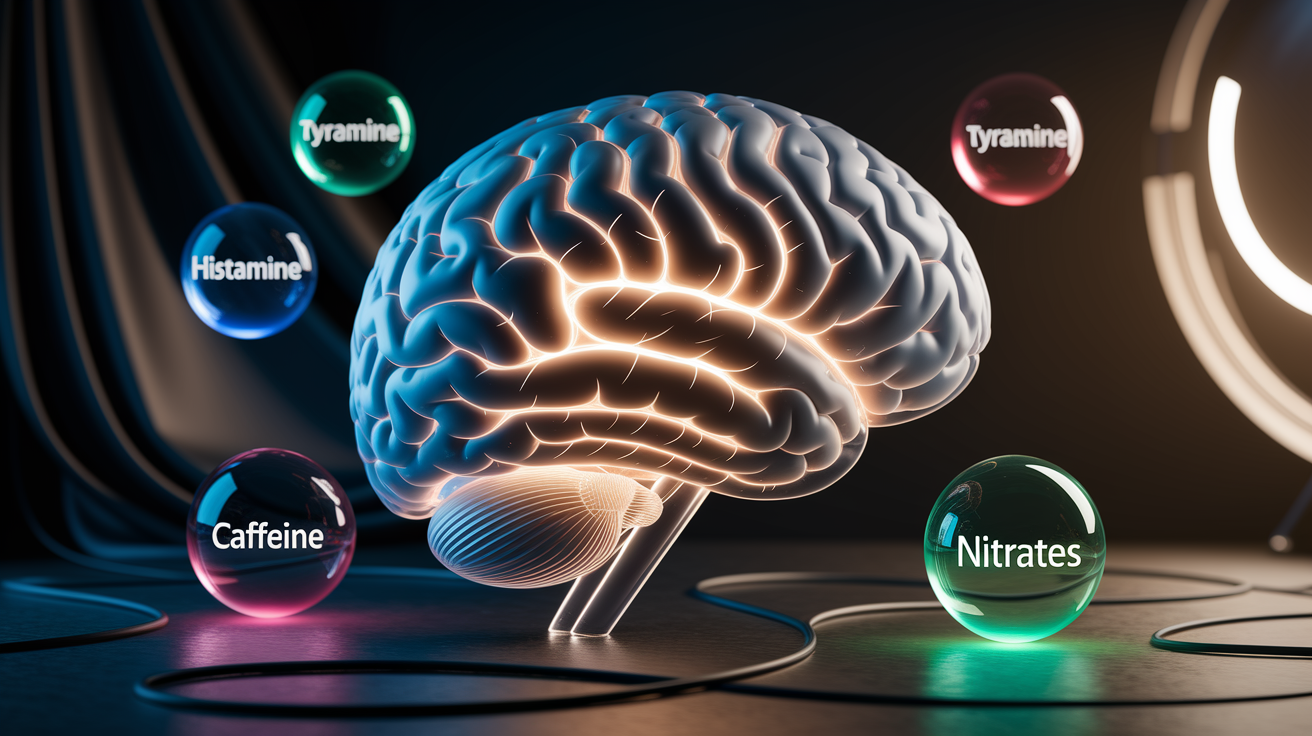
Food triggered headaches involve changes in blood vessel diameter and neurotransmitter activity. Biogenic amines like tyramine and phenylethylamine influence how norepinephrine and serotonin get released. These chemical messengers regulate vascular tone. When these amines flood your system after eating aged or fermented foods, brain blood vessels can constrict and then dilate rapidly. That sequence creates the throbbing pain many people describe. Caffeine works differently by blocking adenosine receptors, which normally promote vasodilation. Regular caffeine intake keeps vessels constricted, so sudden withdrawal or a large dose can trigger rebound dilation and pain.
Additives and preservatives introduce another layer of complexity. Nitrates and nitrites in processed meats convert to nitric oxide in your body, a powerful vasodilator. Monosodium glutamate activates glutamate receptors in the brain and may overstimulate neural pathways involved in pain signaling. Some people metabolize these compounds efficiently and never notice symptoms. Others experience headaches even after small exposures. Dose, individual enzyme activity, and gut microbiome composition all influence whether a food becomes a trigger.
| Compound | Food Sources | Effect on Headaches |
|---|---|---|
| Tyramine | Aged cheeses, cured meats, fermented vegetables, soy sauce | Causes norepinephrine release, leading to vasoconstriction followed by rebound dilation |
| Histamine | Fermented foods, aged cheese, red wine, canned fish | Triggers inflammatory and vascular responses, may dilate blood vessels and sensitize pain pathways |
| Nitrates/Nitrites | Bacon, hot dogs, ham, sausages, deli meats | Convert to nitric oxide, promoting rapid vasodilation in cerebral blood vessels |
| MSG | Fast foods, soups, chips, condiments, frozen meals | Activates glutamate receptors, potentially overstimulating neural pain pathways |
How to Recognize Food-Triggered Headache Symptoms and Timing

Food related headaches typically show up as throbbing or pulsing pain on one or both sides of your head. You might also get nausea, vomiting, sensitivity to light (photophobia), and sensitivity to sound (phonophobia). Intensity can range from a dull ache to severe, disabling pain that forces you to stop what you’re doing and lie down in a dark, quiet room. These symptoms overlap with migraine, which makes sense. Dietary triggers often provoke migraine attacks in susceptible people.
Timing depends on the compound and how quickly your body processes it. Alcohol and caffeine tend to act faster, with headaches appearing within one to three hours. Nitrates from processed meats may trigger symptoms within two to four hours. Tyramine rich foods show more variability because tyramine levels depend on how long the food has aged or fermented. Some people notice delayed reactions six to twelve hours later, especially if they ate the trigger food with a meal that slowed digestion.
Watch for these timing patterns:
- Caffeine withdrawal headaches usually begin 12 to 24 hours after your last dose if you consume caffeine daily and then skip it
- Alcohol symptoms often appear within one to three hours of drinking, especially with red wine or beer
- Nitrates and nitrites from processed meat typically start within two to four hours of eating
- Tyramine onset varies widely from 30 minutes to several hours depending on food age and individual metabolism
- MSG dose dependent reactions can appear within 20 minutes to two hours, often with a feeling of pressure or tightness across the forehead
Tracking Food Headache Triggers with a Structured Diary Method

A structured food and headache diary removes guesswork and replaces it with data. Instead of trying to remember what you ate three days ago when a headache started, you’ve got a written record that reveals patterns over weeks. That record becomes especially valuable when you’re dealing with multiple potential triggers or delayed reactions. Many people discover they’ve been blaming the wrong food because they didn’t account for timing or portion size.
Record every meal, snack, and beverage along with specific details. Write down portion sizes, brand names, preparation methods, and the exact time you ate. Note how much caffeine you consumed, whether from coffee, tea, soda, or chocolate. Track headache onset time, intensity on a scale of 1 to 10, duration, and any accompanying symptoms like nausea or light sensitivity. Include sleep quality, stress level, hydration, and menstrual cycle if applicable. These factors interact with dietary triggers. The goal is to capture enough context to spot reliable associations.
Use an elimination approach after you’ve tracked for at least two weeks and identified suspected triggers. Remove all high risk foods at once and eat only low risk, simple foods for two to four weeks. Choose fresh meats instead of processed, fresh vegetables, cooked grains, and non citrus fruits. Avoid alcohol, caffeine beyond a small consistent dose, aged cheeses, chocolate, fermented foods, and products with MSG or artificial sweeteners. If your headache frequency or intensity drops during this period, you’ve confirmed that diet plays a role.
Reintroduction Timing
Reintroduce one removed food at a time, waiting 48 to 72 hours between each new item. Eat a normal sized portion of the test food and track symptoms carefully for the next three days. If a headache occurs during that window, especially if it follows the expected timing pattern for that food, you’ve likely identified a trigger. Wait until symptoms fully resolve before testing the next item. If no headache appears after three days, that food is probably safe for you and can return to your regular diet. Continue this process until you’ve tested all suspected triggers, keeping detailed notes on every reaction.
Why Certain Food Categories Tend to Be High-Risk

Aging, fermentation, and curing processes concentrate biogenic amines in food. Fresh milk contains minimal tyramine, but as cheese ages, bacteria break down proteins and tyramine levels climb. A two month old cheddar has far more tyramine than a one week old fresh mozzarella. The same principle applies to cured meats, fermented vegetables, and aged wines. The longer the process runs, the higher the amine content and the greater the headache risk for sensitive people. That’s why “aged” and “fermented” appear so often on trigger lists.
Manufacturing methods introduce compounds that don’t exist in fresh, whole foods. Nitrates and nitrites prevent bacterial growth in processed meats but also dilate blood vessels. Sulfites preserve color and shelf life in dried fruits, wines, and canned goods but can trigger reactions in people who metabolize sulfites poorly. MSG enhances flavor in snacks, soups, and restaurant food but activates neural pathways linked to headache in some individuals. Industrial food production prioritizes shelf stability and taste over headache risk, so processed and packaged items carry higher trigger loads.
Categories like sweets and alcoholic beverages often combine multiple headache active components in a single serving. A piece of dark chocolate delivers both caffeine and phenylethylamine. Red wine brings together alcohol, histamine, sulfites, and tannins. A handful of mixed nuts may include tyramine rich varieties alongside sulfite dusted dried fruit. When you consume these combination foods, it becomes harder to pinpoint which compound triggered your headache. The cumulative effect can be stronger than any single ingredient alone.
Food Additives and Preservatives as Hidden Food Headache Triggers

Additives hide in packaged foods under technical names that don’t immediately signal headache risk. You might recognize “monosodium glutamate” or “sodium nitrite” on a label, but “hydrolyzed vegetable protein,” “autolyzed yeast extract,” and “textured protein” all contain free glutamate that can act like MSG. Sulfites appear as “sodium bisulfite,” “potassium metabisulfite,” or simply “sulfur dioxide.” Nitrates and nitrites show up as “curing salt,” “sodium nitrite,” or “celery powder” (which naturally concentrates nitrates). Unless you know what to look for, these additives stay hidden.
Processed snacks, frozen meals, canned soups, deli meats, and condiments concentrate additives because they need long shelf lives and strong flavors. A single serving of canned soup might include MSG, hydrolyzed protein, and added salt. A deli sandwich delivers nitrites from the meat, sulfites from pickles or dried tomatoes, and MSG from seasoning blends. Fast food and restaurant meals rarely disclose full ingredient lists, so you’re consuming unknown quantities of potential triggers every time you eat out.
Look for these label cues to spot hidden sources:
- “Flavor enhancer” or “natural flavoring” often indicates free glutamate or MSG
- “Hydrolyzed,” “autolyzed,” or “textured” protein contains free glutamate
- “Cured,” “smoked,” or “preserved” meat likely contains nitrates or nitrites
- “Sulfur dioxide,” “bisulfite,” or “metabisulfite” means sulfites used for preservation
- “Celery powder,” “celery juice,” or “sea salt” in cured meats are natural nitrate sources
- “Aspartame,” “acesulfame potassium,” or “sucralose” are artificial sweeteners
Read ingredient lists on packaged foods before you buy. When possible, choose products with short, simple ingredient lists. Fresh, whole foods require no label reading because they don’t contain additives. A plain chicken breast, a bag of rice, or a head of broccoli carries zero hidden triggers.
Meal Timing, Blood Sugar, and How Eating Patterns Influence Headache Risk
Skipping meals drops your blood sugar and increases migraine risk, even if you avoid every known food trigger. Low blood sugar reduces glucose delivery to the brain, which disrupts normal signaling and can provoke headache. Long gaps between meals compound the problem by creating larger blood sugar swings when you finally eat. Irregular eating patterns also interfere with sleep and stress hormones, both of which influence headache susceptibility.
Dehydration makes dietary triggers more potent. Alcohol and caffeine both have diuretic effects, so drinking them without adequate water amplifies blood vessel changes and worsens headache risk. Salty processed foods increase fluid loss, and inadequate hydration thickens blood and reduces oxygen delivery to the brain. If you’re already mildly dehydrated, even a small portion of a trigger food can push you over the threshold into a headache.
Follow these timing habits to reduce risk:
- Eat at consistent times. Regular meals stabilize blood sugar and reduce vulnerability to dietary triggers. Aim for three meals with small snacks if needed.
- Drink water throughout the day. Target at least eight glasses. Increase intake if you consume caffeine, alcohol, or salty foods.
- Avoid prolonged fasting. Don’t skip breakfast or go more than four to five hours without eating during the day.
- Keep balanced snacks available. Pair protein or fat with carbohydrate to slow digestion and prevent blood sugar crashes. Examples include nuts with fruit, cheese with crackers, or yogurt with granola.
Substitutions and Safer Alternatives to Reduce Food Headache Triggers

Swapping high risk foods for safer alternatives lets you enjoy varied meals without constant headache worry. Fresh meats like chicken, turkey, and unprocessed fish replace bacon, sausage, and deli meats. These fresh proteins deliver the same nutrition and versatility without nitrates or nitrites. Grilling, roasting, or sautéing fresh cuts takes a few extra minutes but eliminates a major trigger category.
Fresh cheeses such as mozzarella, ricotta, cottage cheese, and cream cheese contain minimal tyramine because they haven’t aged long enough for biogenic amines to accumulate. Use them in place of cheddar, parmesan, or blue cheese in recipes. If you’re sensitive to lactose or dairy proteins, plant based cheeses made from nuts or soy offer another option. Check labels for added MSG or preservatives though.
Lower tannin fruits, lactose free dairy, and natural sweeteners reduce exposure across other trigger categories. Choose green or yellow apples instead of red skinned varieties. Try lactose free milk or almond, oat, or coconut milk if dairy is a problem. Swap artificial sweeteners for small amounts of honey, maple syrup, or regular sugar, keeping portions moderate to avoid blood sugar spikes.
| Trigger Category | Safer Alternative | Notes |
|---|---|---|
| Processed meats (bacon, hot dogs, deli turkey) | Fresh chicken, turkey, fish, tofu, beans | Cook from scratch to avoid nitrates and nitrites. Season with fresh herbs instead of packaged blends. |
| Aged cheeses (cheddar, parmesan, blue cheese) | Fresh mozzarella, ricotta, cottage cheese, cream cheese | Use within a few days of opening. Plant based options work if you avoid dairy entirely. |
| Red wine, beer, whiskey | White wine (lower histamine), clear spirits in moderation, nonalcoholic beverages | Hydrate well if you drink alcohol. Many people tolerate vodka or gin better than wine or beer. |
| Chocolate (high phenylethylamine and caffeine) | Carob, white chocolate (lower caffeine), small portions of milk chocolate | Test portion size. Some people tolerate a small square but react to a full bar. |
| Artificial sweeteners (aspartame, sucralose) | Honey, maple syrup, small amounts of cane sugar | Natural sweeteners still affect blood sugar, so use sparingly. Stevia may be tolerated by some people. |
Lifestyle and Prevention Strategies for Long-Term Reduction of Food Sensitivity

Consistent sleep, hydration, and stress management lower your overall headache threshold and make dietary triggers less likely to provoke attacks. When you’re well rested, your nervous system handles vascular and neurochemical fluctuations more smoothly. Chronic sleep deprivation sensitizes pain pathways and amplifies the effect of tyramine, caffeine, and other compounds. Aim for seven to nine hours of sleep per night on a regular schedule. Go to bed and wake at the same time even on weekends.
Hydration supports steady blood volume and optimal oxygen delivery to the brain. Dehydration thickens blood, reduces cerebral perfusion, and makes you more vulnerable to foods that affect blood vessels. Drink water throughout the day rather than gulping large amounts all at once. If you consume caffeine or alcohol, add an extra glass of water for each serving to offset diuretic effects. Herbal teas, diluted fruit juice, and water rich foods like cucumbers and melons also contribute to daily fluid intake.
Stress activates the hypothalamic pituitary adrenal axis and alters neurotransmitter balance, priming the brain for headache. Chronic stress lowers your tolerance for dietary triggers that might not bother you during calmer periods. Regular physical activity reduces baseline stress and improves vascular health, but avoid intense exercise on an empty stomach. It can drop blood sugar and trigger headache. Gentle practices like walking, yoga, or stretching offer stress relief without the metabolic demands of high intensity workouts. Scheduling consistent meal times, managing work demands, and carving out time for relaxation all reduce the likelihood that a trigger food will push you into a headache.
When to Seek Medical Guidance for Persistent Food Headache Triggers

Frequent, severe, or disabling headaches deserve professional evaluation even if you’ve identified dietary patterns. A neurologist can assess whether you have migraine, tension type headache, or another primary headache disorder and recommend treatment options beyond diet modification. Prescription medications, nerve blocks, and newer biologics can reduce attack frequency and intensity when lifestyle changes alone aren’t enough.
Gastroenterology referral makes sense if you suspect food intolerance or malabsorption rather than true triggers. Lactose intolerance, celiac disease, and small intestinal bacterial overgrowth (SIBO) can all cause headaches alongside digestive symptoms. A gastroenterologist can order breath tests, endoscopy, or antibody panels to diagnose these conditions. Treating the underlying gut issue often resolves headaches without needing to avoid specific foods long term.
Food sensitivity testing, particularly IgG panels, remains controversial because elevated IgG antibodies to foods are common in healthy people and don’t reliably predict symptoms. Elimination diets guided by a structured diary offer more accurate results than commercial tests. If you’ve completed a thorough elimination and reintroduction process and triggers remain unclear, discuss advanced options with your doctor. In some cases, working with a registered dietitian who specializes in headache can help refine your approach and ensure nutritional adequacy while avoiding triggers.
Seek urgent care if you experience:
- Sudden, severe headache that peaks within seconds (thunderclap headache)
- Headache with fever, stiff neck, confusion, vision changes, or weakness
- Headache after a head injury or trauma
- Headache that worsens despite treatment and is accompanied by unexplained weight loss, night sweats, or other systemic symptoms
Final Words
You learned which foods and compounds—like tyramine, histamine, nitrates, caffeine, and MSG—can change blood vessels and brain signals and spark a headache. You also saw how timing, symptoms, and additives matter.
Use a simple diary, try a short elimination, and read labels for “flavor enhancer” or “preserved with.” Swap processed items for fresh choices and mind meal timing and hydration.
Track one change at a time. Spotting food headache triggers gives you clear steps to cut attacks and feel better.
FAQ
Q: What type of headache is triggered by food?
A: The type of headache triggered by food is usually a migraine or migraine-like attack, with throbbing pain, nausea, and light or sound sensitivity, often starting within hours after a trigger food.
Q: What is the 5 4 3 2 1 rule for migraines?
A: The 5 4 3 2 1 rule for migraines is a grounding technique: name 5 things you see, 4 you feel, 3 you hear, 2 you smell, and 1 you taste to reduce sensory overload that can worsen attacks.
Q: Do bananas help migraines?
A: Bananas can help migraines for some by supplying potassium and steady carbs to prevent low blood sugar, but they contain small amounts of tyramine and may trigger headaches in a few sensitive people.
Q: How to stop tyramine headache?
A: To stop a tyramine headache, stop the trigger food, rest in a quiet dark place, hydrate, take your usual pain medicine, track the food, and seek urgent care if pain is sudden, severe, or persistent.